You search for a business’s hours, a quick definition, or a nearby service, and zero-click searches give you an answer on the Search engine results page before you visit a website. That result isn’t a search failure.
Google uses Featured snippets and AI Overviews to answer queries directly, with each format presenting information differently. As answers and customer actions move into Google and other AI search platforms, businesses need to understand answer engine optimization and generative engine optimization. This shift makes the transition from SEO to AEO important for brand visibility and your SEO strategy, so we’ll examine each Google feature next.
Key Takeaways
- A zero-click search gives users an answer directly on Google through Featured snippets, Knowledge panels, People Also Ask, or Local packs.
- These features can reduce website visits, but they still build brand visibility and may support calls, directions, reviews, or purchases.
- Selected passages provide direct answers, while AI Overviews summarize information from multiple sources and include links for deeper research.
- Google chooses answer features automatically based on query relevance, content quality, and usefulness. Review Google’s guidance on AI features.
- Track analytics metrics such as impressions, branded searches, conversions, and visibility across AI search platforms, because search engine results alone don’t explain how AI search affects organic traffic.
How Zero Click Search Works on Google
A zero-click search gives you useful information directly on Google, so you don’t need to open an organic result. You might check a store’s hours, call a nearby plumber, request directions, compare products, or remember a brand without visiting its website.
This behavior existed before AI Overviews. Google gradually expanded it through richer results that match the action behind each query. Traditional features now work alongside newer answer systems found across AI search platforms.
The Google Search Features That Answer Queries Without a Click
Google uses different search features for different types of intent:
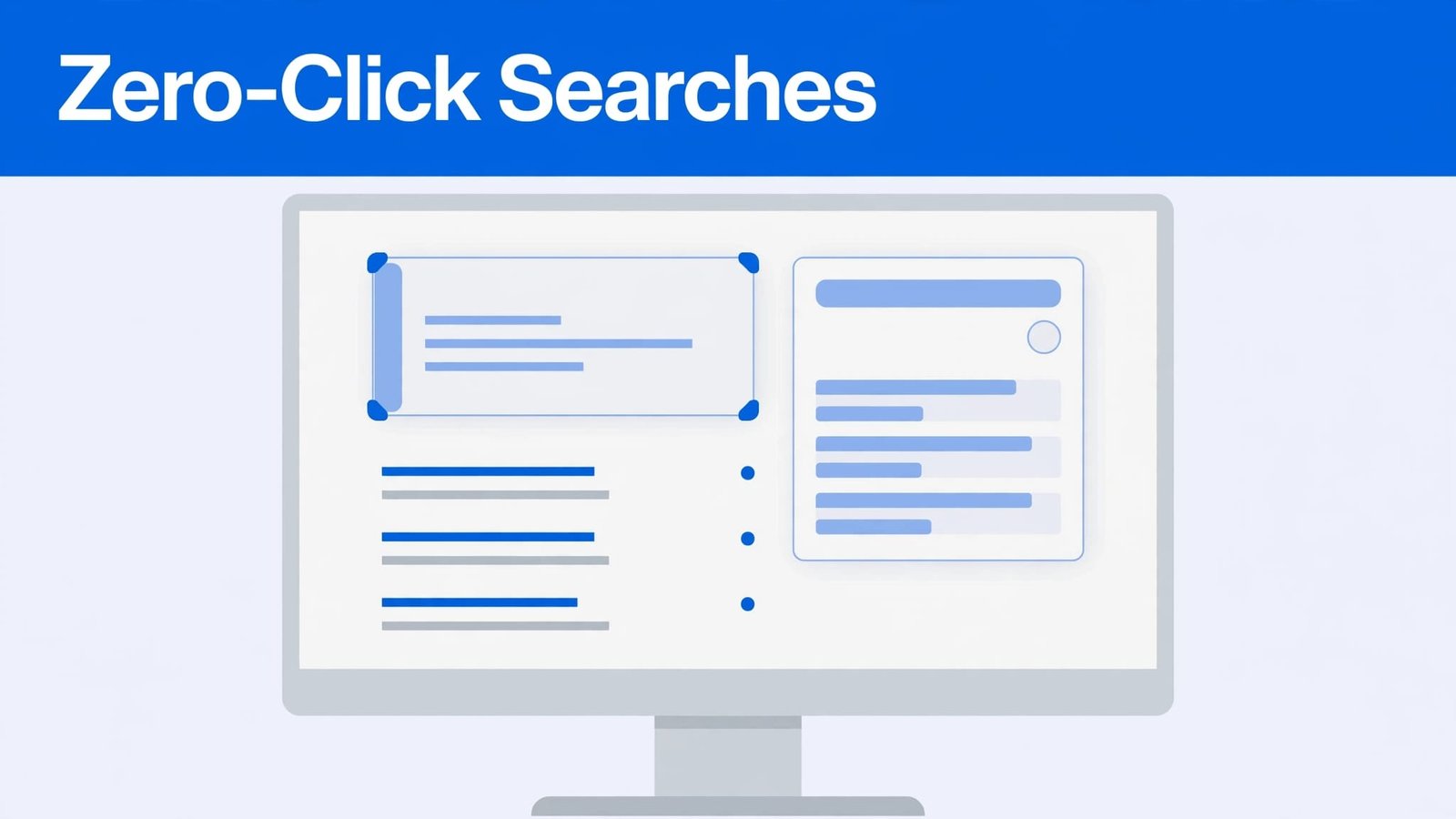
- Featured snippets provide a short answer pulled from a webpage. They often appear for definition, explanation, and how-to searches, such as “how to reset a router.” The result may show a paragraph, list, or table above the standard organic listings.
- Knowledge panels summarize known entities, including people, brands, organizations, and places. They can display a logo, website, founding details, social profiles, and related information.
- People Also Ask displays follow-up questions that expand as users select them. This format helps people explore a topic without returning to the search box.
- Local packs show nearby businesses with information such as hours, phone numbers, reviews, addresses, directions, and appointment options. A search for “coffee shop near me” can lead directly to a visit or phone call.
- Calculators and instant answers handle tasks inside the results page. Google can convert measurements, calculate percentages, show weather, define words, or answer simple factual questions.
- AI Overviews use Generative AI to summarize complex or multi-part queries. Unlike Featured snippets, they can combine information from several sources, compare options, and provide links for deeper research.
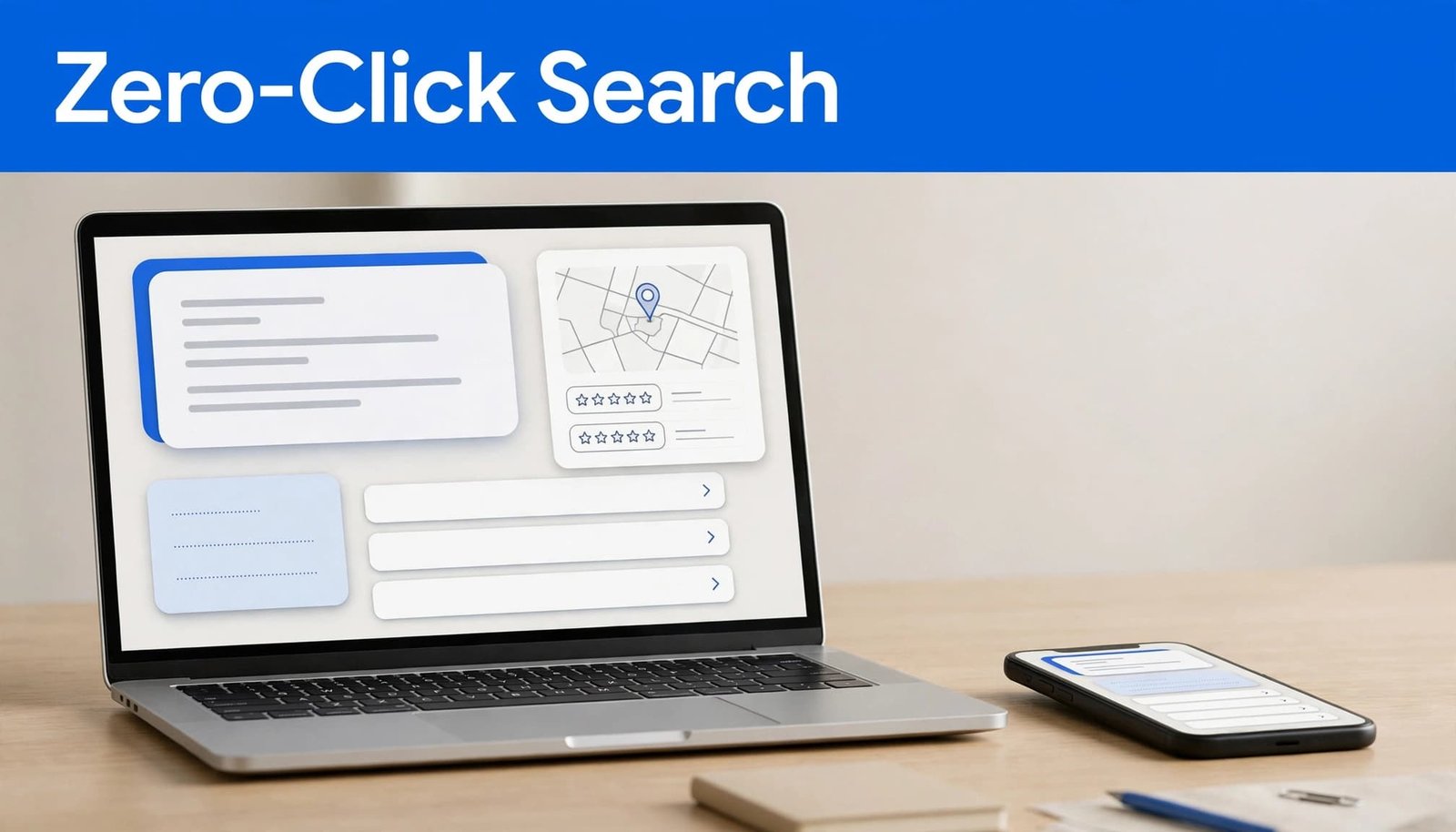
The best feature depends on what the searcher wants. A quick fact needs speed, while a local query often needs an action. Voice search and complex questions may require different formats.
What Happens Between a Search Query and an On-Page Answer
The process starts when someone enters a query. Google’s systems interpret the likely intent, whether the person wants information, a specific website, a local business, or a transaction.
Google then crawls available pages, stores useful information in its index, and evaluates results with many relevance and quality signals. These systems examine page content, context, freshness, links, and relationships among entities. Entity optimization can clarify connections between businesses, people, places, and organizations. Structured data and Schema markup can help Google interpret eligible details such as a business’s address, hours, products, or organization information. They can make a page eligible for richer results, but neither guarantees placement. See Google’s structured data documentation for the technical foundation.
Finally, Google chooses which result format fits the query. A page ranking in the blue links may also appear in a featured snippet, but that outcome isn’t automatic. The same applies to local packs, knowledge panels, People Also Ask, and AI Overviews. Organic ranking and answer-feature visibility are related, but they are not the same result.
For businesses, measuring only rankings can hide valuable visibility across search engine results and AI search platforms. An AI search visibility audit checklist can help identify how consistently your business information appears across answer-driven search results. It can also support AI visibility efforts and generative engine optimization across AI search platforms. Comparing those findings with performance on other AI search platforms gives businesses a broader view of how their information is discovered.
Why More Searches End Without a Website Visit
Search behavior has changed because Google now answers more questions on the Search engine results page. Mobile users want quick information, voice search handles short requests, and AI search platforms are reshaping how people discover answers. Local searches often lead to a call or visit rather than a website session.
Recent 2025 and 2026 studies report that a large share of Google searches end without an external click. The reported rates vary because researchers use different panels, countries, devices, time periods, and definitions. One 2026 US analysis reported 68.01% of searches ending without a click, while another session-level study reported 46.96%. These Zero-click searches figures reflect changing behavior, not a permanent universal percentage.
A Zero-Click Result Can Still Create Business Value
A website visit is only one possible outcome of a search. When someone searches for “dentist near me,” Local packs can show the business phone number, hours, reviews, directions, and booking options. The searcher may call, request directions, reserve an appointment, or visit the store without opening the website.
This matters for restaurants, service providers, retailers, and other location-based businesses. Google can answer the immediate question while still sending demand into the real world. A business may lose Organic search traffic but gain a phone lead, store visit, map interaction, or completed booking.
Knowledge panels create a different type of value. When a searcher sees a company’s name, logo, category, location, and other details, that exposure can improve Brand visibility. Repeated recognition may also build Brand authority over time, leading someone to search for the brand directly, visit the website, or choose it during a buying decision.
A zero-click search can reduce measurable website traffic while preserving customer demand.
That is why marketers should measure more than organic sessions. Track calls, direction requests, bookings, branded searches, store visits, and conversions from local profiles where possible. These Digital marketing strategies provide a broader view of performance. For a wider look at how different industries experience this shift, review the zero-click search industry analysis.
How AI Overviews Change the Click Decision
AI Overviews can combine a definition, short explanation, comparison, source links, and follow-up prompts in one result. Older features, such as Featured snippets, usually displayed one selected passage from one webpage. An AI Overview can give the searcher a wider starting point before showing several paths for further research.
Generative AI changes the reason someone clicks by combining information from multiple sources. A user may open a cited source when they need proof, detailed instructions, product specifications, pricing, or a service provider. This cited presence can improve AI visibility, especially when generative engine optimization supports clear, useful content.
Mobile search makes this behavior stronger because a compact answer is easier to scan than several webpages. Voice search also favors direct responses, while AI search platforms can resolve factual questions without a visit. As Google improves these result features, search engine results become the initial destination, and a website becomes the next step only when the user needs more.
How to Get Visibility in Zero-Click Search Results
Winning zero-click searches starts with matching your page to the answer Google wants to display. The goal is useful visibility and measurable actions, not a click at any cost. Answer engine optimization and generative engine optimization combine content clarity with visibility across AI search platforms.
Format Content for Featured Snippets
Answer the main question early, then add context for readers who need more detail. A definition, process, comparison, or short answer gives Google a clear passage to evaluate for the Search engine results page.
Useful formats include:
- A concise definition in the first paragraph.
- Numbered steps for processes and how-to queries.
- Short comparison tables for options with distinct features.
- Direct question-and-answer sections based on related searches.
- Examples that show how a recommendation works in practice.
For example, a page targeting “what is local SEO?” could begin with a two-sentence definition, followed by its benefits, ranking factors, and a practical example. A page targeting “how to optimize a Google Business Profile” could use numbered steps.
| Search intent | Helpful format |
|---|---|
| Definition | Two or three sentence answer |
| How-to query | Numbered steps |
| Comparison | Compact table |
| Follow-up question | Question heading and direct answer |
Use People Also Ask questions to find related subtopics, but don’t copy the same answer under several headings. If one question asks why local SEO matters and another asks how it works, answer each from a different angle.
Formatting can improve eligibility for Featured snippets, but it cannot guarantee a featured snippet. Google chooses these results automatically. Its featured snippet documentation explains that snippets may also appear within People Also Ask results.
Clear headings, descriptive metadata, useful internal links, and readable page structure support stronger search engine results. Review these on-page SEO strategies before publishing.
Build Strong Local and Entity Signals
Local businesses need accurate information wherever customers may find them. Keep your business name, address, phone number, hours, services, photos, and location details consistent across your website, Google Business Profile, directories, and major review platforms.
Accurate details can support visibility in Local packs and Knowledge panels. Add relevant LocalBusiness structured data when the details match visible page content. Use schema markup to describe services, locations, and operating hours clearly.
Encourage genuine reviews, respond to them, and create location pages that explain the services available in each area. Voice search queries often include phrases such as “near me,” “open now,” or “who can fix this today.” These patterns make voice search optimization guidance useful for local content planning.
Brands and organizations also need consistent entity signals. Entity optimization includes using the same name across profiles, publishing a clear About page, identifying authors with relevant biographies, and earning mentions from trustworthy third-party websites. Organization or Person schema markup can help describe those relationships, but markup cannot replace accurate, useful content. Consistency builds Brand authority over time.
Measure Visibility Beyond Organic Search Traffic
Organic search traffic and Click-through rate alone give an incomplete picture in a zero-click search. A result can create a call, direction request, branded search, or sale without producing a website session.
Track performance by query intent and SERP feature. Useful Analytics metrics include:
- Impressions, query coverage, and average position.
- Featured snippet ownership and local pack visibility.
- Branded searches, calls, bookings, and direction requests.
- Direct conversions and assisted conversions.
- Mentions or citations in AI search results when reliable data is available.
Google’s Search Console now includes reporting for generative features such as AI Overviews and AI Mode. Compare informational queries by impressions and coverage, while judging local queries by calls, directions, and bookings. Generative AI visibility can also be compared with performance across AI search platforms.
When broader reporting is available, compare Google data with visibility across AI search platforms. Review citations, mentions, and presence across AI search platforms alongside traditional rankings. A useful content strategy can build Topical authority and earn visibility beyond a single query. Each search feature has a different job, so every page shouldn’t be judged by the same traffic goal.
Frequently Asked Questions
Zero-click searches raise practical questions for marketers because visibility no longer depends on a website visit. These answers address the decisions that often follow reviews of rankings, impressions, and conversions.
Can Google show my content in an AI Overview if I do not rank first?
Yes. Google can select information from pages that support an answer, even when those pages don’t hold the top organic position for the query. Relevance, clarity, source quality, and passage usefulness all influence whether Google includes it.
A strong page should still compete for traditional rankings, but position one is not the only path to AI visibility. Clear explanations, original evidence, and well-organized content give Google more useful material to reference.
Can I stop Google from using my content in AI search features?
Google introduced a Search Console control that lets site owners exclude their property from Generative AI features, including AI Overviews and AI Mode. Google says this setting doesn’t affect ordinary Search rankings, and it doesn’t apply to the Gemini app.
The control applies to Google’s features, not other AI search platforms. Before opting out, compare the value of that exposure with your traffic and conversion goals.
Does a zero-click search always hurt SEO performance?
No. A zero-click result can reduce organic sessions and click-through rate while increasing brand recognition, phone calls, direction requests, or later branded searches. The effect depends on the query and the action behind it.
A definition search may provide visibility without producing a visit. A local service search can create a customer through a call or booking, even when Google Analytics records no session.
How can I measure AI visibility in Google Search Console?
As of June 2026, Google Search Console includes a Search generative AI performance report for AI Overviews, AI Mode, and AI Overviews in Discover. The report focuses on impressions, so it shows where Google displays your content rather than proving those appearances generated revenue.
The report covers Google’s Generative AI features, but it doesn’t measure visibility across other AI search platforms. Track citation frequency as a visibility signal, then pair the report with analytics metrics, call tracking, booking data, and branded-search trends. For related Discover measurement details, review Google’s Discover documentation.
Should I optimize every page for zero-click results?
No. Start with pages that answer short informational questions or support local decisions. Featured snippets and Voice search may reward concise answers, but not every page needs the same format on a Search engine results page.
Product pages, service pages, pricing pages, and comparison content should give users a clear reason to visit. Add original details that Search engine results can’t fully replace, such as firsthand examples, tools, specifications, research, strong opinions, or interactive features. These elements also build topical authority.
What should I do if zero-click searches reduce my traffic?
First, separate lost clicks from lost business. Compare organic sessions with leads, calls, bookings, revenue, branded searches, and local actions before changing your strategy.
Then update pages that lost clicks but still earn impressions. Strengthen their titles, introductions, supporting evidence, internal links, and conversion paths. The goal is to make the result useful at a glance while giving interested searchers a clear next step through your site.
Conclusion
Zero-click searches move SEO beyond winning a website visit. The strongest strategy earns visibility in the result, provides a clear answer, and builds Brand authority over time.
Review your site’s top queries and note whether local results, snippet features, or AI Overviews appear. Then monitor Generative AI and AI search platforms, and update priority pages with Digital marketing strategies, a focused Content strategy, and Generative engine optimization. This approach strengthens Brand visibility, even when Organic search traffic doesn’t follow.