People now get answers before they ever reach your site. Google AI Overviews, ChatGPT, Perplexity, Claude, and Gemini often do the sorting first, then hand users a short list of sources they trust.
That shift changes what an audit needs to measure. An AI search visibility audit checklist helps you see whether your brand is found, understood, trusted, and cited, not only ranked.
If you want a wider view of how search is shifting, this SEO to AEO transition guide gives useful context. For now, the goal is simple: build a baseline, find weak spots, and turn the audit into a routine your team can repeat in 2026.
Start with a clean baseline before you fix anything
A good audit starts like a photograph. You need a clear picture of today before you can prove progress next month.
Begin with a small prompt set, not a giant spreadsheet. Use prompts tied to your real offers, your brand, and your market. In March 2026, teams are tracking visibility across multiple AI tools because answers shift by model and by day. That means your baseline should come from the platforms your audience actually uses.
List the prompts real customers use at each stage of the journey
Group prompts by intent, then test a few for each core topic. Keep it tight and practical:
- Discovery: best payroll software for small teams, how to fix slow site speed
- Comparison: Ahrefs vs Semrush for local SEO, Shopify vs WooCommerce for SEO
- Reviews and proof: best-rated HVAC company in Austin, top SEO consultants for SaaS
- Price and buying: how much does local SEO cost, affordable PPC management
- Local intent: emergency dentist near me, best roofer in Phoenix
That last group matters more than many brands think. Conversational and spoken searches often mirror the phrasing AI systems now summarize, so voice search strategies in PPC can also sharpen your prompt research.

Check where your brand appears, how often, and in what context
Presence alone isn’t enough. A weak mention can be as useless as no mention at all.
For each prompt, note whether your brand is named, linked, described correctly, compared fairly, or ignored. Then score each result on three simple factors: visibility (did you appear), accuracy (was the description right), and prominence (were you central or buried). A one-to-three scale works well.
If you want a second opinion on common scoring areas, the AI visibility checklist from ARGEO is a helpful reference. The main point is consistency. Use the same prompt set, same scoring, and the same review method every time.
Audit whether AI systems can crawl, read, and trust your site
If your pages are hard to access, AI systems may never surface them. Think of this part as clearing the road before asking anyone to visit your shop.
Review crawl paths, indexation, and page access
Check the basics first: robots.txt, XML sitemaps, noindex tags, canonicals, broken pages, and redirect chains. Then test whether your most important pages render well without heavy JavaScript failures.
A page blocked, broken, or trapped behind messy rendering often disappears from the pool of usable sources. That hurts both search visibility and AI citations.
If a page can’t be reached cleanly, it can’t be quoted cleanly either.
Check page speed, mobile usability, and clean page structure
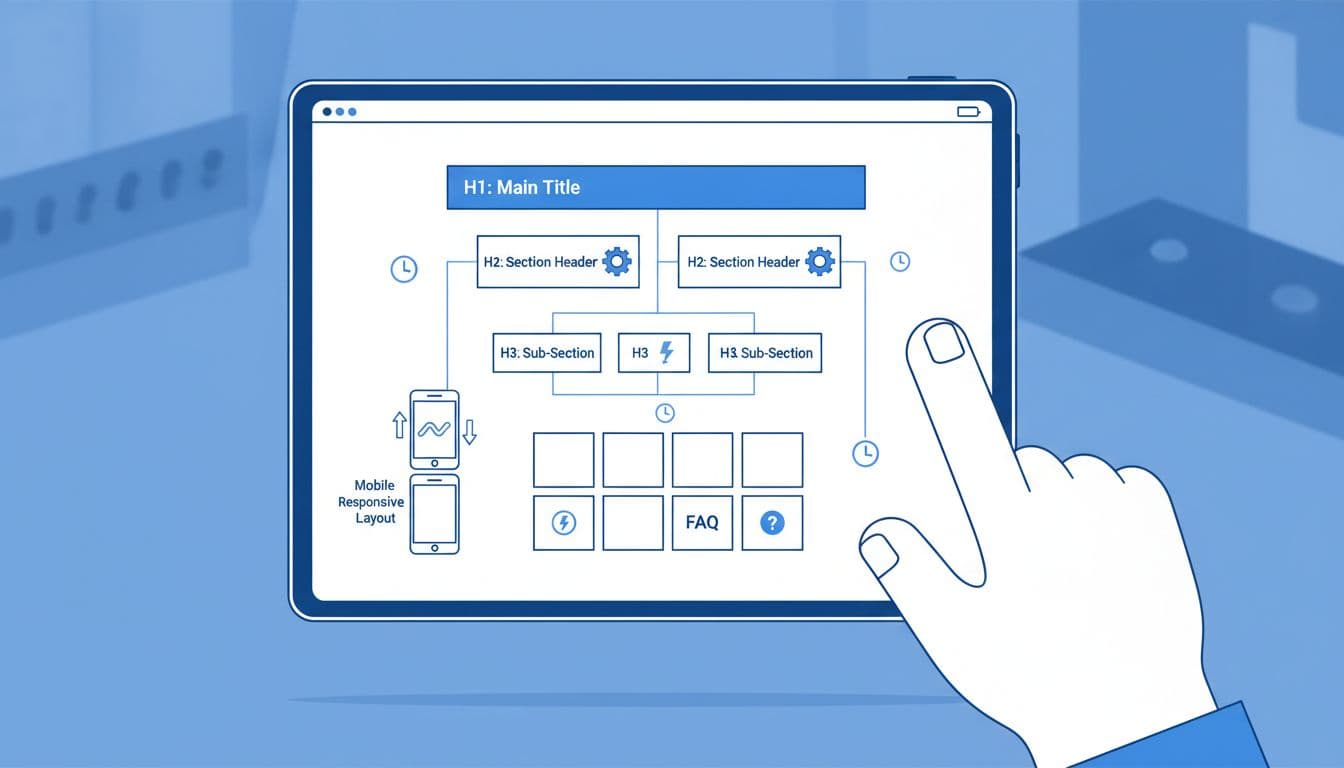
Fast pages win attention, but they also help machines parse content with less friction. Review loading speed, mobile layout, heading structure, and whether key answers appear near the top.
Short answer blocks help a lot. So do plain subheads, short paragraphs, and pages that don’t bury the useful part under giant pop-ups, sliders, or walls of fluff. If you’re using AI to speed up drafting or cleanup, this piece on AI tools benefits for SEO content can help without turning pages into generic mush.
Test schema markup and entity signals
Use the schema types that match the page, such as Organization, LocalBusiness, Product, Article, FAQ, or Review. Then check for errors and missing fields.
Schema won’t rescue weak content, but it helps machines connect your brand, offers, people, and locations. The AI SEO checklist from Foglift also highlights crawler access and structured data because both shape how easily your site can be interpreted.
Examine if your content is easy to quote and worth citing
This is the heart of the audit. A page can rank, load fast, and still fail if it doesn’t answer the question in a clean, trustworthy way.
Look for clear answers at the top of important pages
Strong pages get to the point quickly. They answer the main question in plain English, then expand with detail.
Audit your top service pages, category pages, and articles for short summaries, definitions, steps, comparisons, and FAQs. These aren’t decorations. They’re the parts AI systems can lift, compress, and cite.
A good page reads like a sharp conversation. The first lines tell you where you are. The next section tells you what matters. Only after that should the long explanation roll in.
Check for trust signals that support every claim
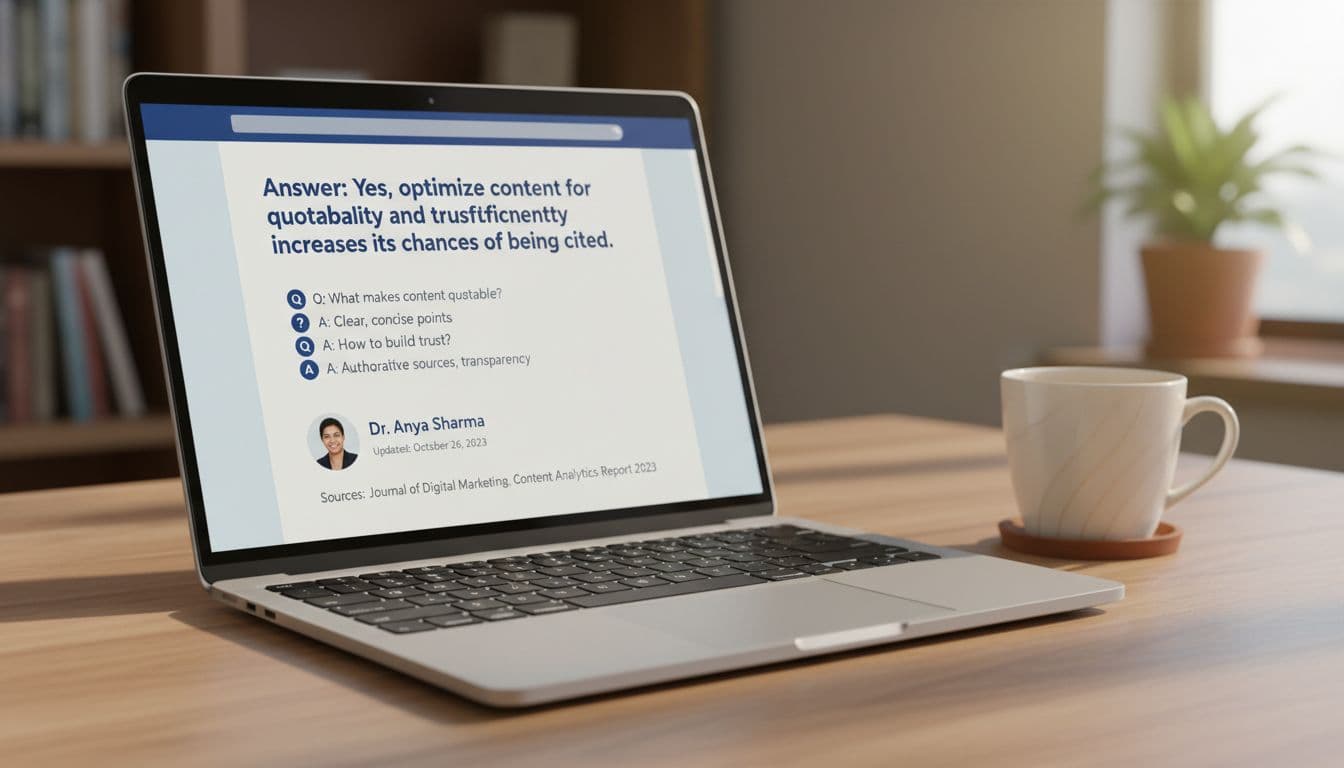
AI systems often prefer pages that show their work. Review whether each key page has visible author details, update dates, cited facts, original examples, reviews, case studies, contact details, and company information.
First-hand experience matters too. A service page with vague promises feels thin. A page with a named expert, clear pricing context, screenshots, proof points, and real examples feels safer to cite.
The AI search visibility content checklist is worth reading here because it focuses on the on-page elements that make content easier to quote.
Find topic gaps that stop you from being seen as a reliable source
Many sites answer part of the story and lose the citation to someone else who answers all of it.
Check for missing subtopics, weak comparison pages, thin service pages, absent local angles, and missing industry context. If you sell accounting software, for example, don’t stop at features. Cover setup, pricing, migration, support, use cases, and comparisons. Breadth builds trust.
Compare your visibility against the sites AI mentions instead
Your real competitors in AI answers may not be the same ones you track in normal search. Sometimes a review site wins. Sometimes a forum thread does. Sometimes a niche publisher owns the prompt.
Study which competitors get cited for your highest-value prompts
Look at direct rivals, directories, publishers, review platforms, and community sites. Then ask why they were chosen.
Was the summary cleaner? Did they answer faster? Did they include fresher stats or stronger proof? The AI search readiness guide from ZipTie frames this well: discoverability is only one part of the job. Extractability and citation-worthiness matter too.
Spot patterns in the answers AI prefers to build
Watch for recurring traits. You may find concise summaries, comparison tables, expert quotes, strong entity signals, or local details appear again and again.
Turn those patterns into checkpoints. If the same traits keep showing up in winning answers, they belong in your audit.
Turn the audit into a working checklist and reporting routine
An audit only helps if it leads to action. Keep the scoring simple enough that a small team can use it every month.
This table gives you a quick way to sort what to fix first:
| Issue type | Impact | Effort | Business value | Priority |
|---|---|---|---|---|
| Wrong brand details in AI answers | High | Low | High | Fix now |
| Important page blocked or noindexed | High | Medium | High | Fix now |
| Thin comparison page for high-intent prompt | High | Medium | High | Next |
| Missing schema on core pages | Medium | Low | Medium | Next |
| Old stats on low-value blog post | Low | Low | Low | Later |
The takeaway is simple: fix access and accuracy first, then improve depth.
Score each issue by impact, effort, and business value
Prioritize pages close to conversion, prompts with buying intent, and pages already indexed but rarely cited. Those usually offer the fastest return.
A page that almost gets mentioned is often a better bet than a page no one sees at all. You’re not rebuilding the whole house at once. You’re fixing the front door, turning on the lights, and making the address easy to read.
Track the few metrics that show real progress
Keep your reporting focused on what moves. Monthly snapshots work well for priority prompts, while quarterly reviews help with broader trends.
Track citations, mentions, share of prompt coverage, accuracy of brand details, and AI referral traffic where you can. Also, note changes over time, because AI answers shift fast, especially after fresh content updates or product changes.
Being seen in AI search isn’t only about showing up. It’s about being described correctly, trusted enough to cite, and useful enough to keep appearing.
Start small. Build your baseline, fix access and clarity first, then deepen your content and trust signals over time.
Run the checklist again next month. If your brand still isn’t being quoted, the answer is usually plain: the best source on the page is still someone else.