A competitor content audit can save you hours, but only if you look past surface details like word count and headline style. The real value is in how strong pages are built, how they answer intent, and how they hold attention for both people and search systems.
Most audits miss that line and end up copying layout choices that do nothing for performance. This guide gives you a repeatable process for spotting structural patterns, scoring what matters, and using those findings to shape content that’s easier to scan, more useful, and better prepared for AI-driven content planning.
If you want stronger SEO, better AI search visibility, and a cleaner content plan, the next step is learning how to read competitor pages with a sharper lens.
What a competitor content structure audit really is, and when to use one
A competitor content structure audit looks at how rival pages are built, not just what they cover. You are studying the shape of the page, the order of ideas, the level of detail, the formatting choices, and the support pieces that help readers move through the content.
That matters because two pages can answer the same query and perform very differently. One may use clear headings, tight sections, and useful internal links, while another buries the same information in a wall of text. A broader content audit reviews what exists and how it performs, as Kontent.ai’s guide to content audits explains, and this version zooms in on structure.
If you already run an SEO site review, this is the next layer. It pairs well with an AI search visibility audit checklist, because AI summaries and search snippets tend to reward pages that are easy to scan and easy to quote.
### How structure differs from topic coverage
Topic coverage asks whether a page includes the right subjects. Structure asks how those subjects are arranged. That difference matters because a page can cover every important point and still feel hard to read, hard to trust, or hard to use.
A useful way to separate the two is to compare them side by side:
| Topic coverage | Structure |
|---|---|
| What ideas appear on the page | How those ideas are ordered |
| Whether key subtopics are present | Whether headings guide the reader well |
| Whether the page answers the query | Whether the answer is easy to find |
| Whether the page is complete | Whether the page is scannable and well paced |
Structure also includes the small things that shape reader behavior. Headings, intro length, paragraph size, bullets, tables, CTAs, and internal links all influence how a page feels once someone lands on it. In other words, content structure is the skeleton, while topic coverage is the organ list.
A page can be factually strong and still lose to a better-built rival.
When you review competitor pages, focus on the pattern, not the wording. You want to see how they move from problem to answer, where they add proof, and how they guide the reader to the next step. That gives you a blueprint without copying their voice or their exact layout.
The signals that make this audit worth doing
A competitor content structure audit is worth your time when the page itself is holding content back. If rankings are soft, engagement is thin, or the SERP clearly rewards quick answers, structure often explains the gap.
Common triggers include:
- Weak rankings despite solid coverage: The page talks about the right topic, but the layout makes it harder to read or trust.
- High bounce or short sessions: Readers land, skim once, and leave.
- Low scroll depth: People never reach the part where your strongest points live.
- A new competitor page appears: Fresh pages often win by using clearer hierarchy and stronger formatting.
- The SERP favors direct answers: Featured snippets, “People also ask” results, and AI summaries often reward clean, scannable sections.
- Thin engagement on a key page: Comments, clicks, or assisted conversions stay flat because the page feels dense or disjointed.
You can keep the audit simple with a 1 to 3 score for each page:
| Score area | 1 | 2 | 3 |
|---|---|---|---|
| Heading flow | Hard to follow | Some structure | Clear, logical path |
| Scanability | Dense blocks | Mixed formatting | Easy to skim |
| Depth balance | Too thin or bloated | Uneven depth | Depth matches intent |
| Support elements | Few or none | Some support | Strong CTAs and links |
| Answer clarity | Buried | Partly clear | Fast, direct answers |
Add the scores together. A page in the low range needs a structural rewrite, while a mid-range page usually needs targeted fixes. The goal is not to imitate the best competitor page line for line. The goal is to spot the structure that makes the page easier to use, then build something sharper and more honest. For a broader audit process, the SEO site audit guide is a useful companion.
How to choose the right competitor pages to study
The best competitor pages to study are the ones that answer the same job, for the same searcher, at the same moment. If you compare the wrong pages, the audit turns noisy fast. One page may teach, another may sell, and a third may close the deal. Those pages need different structures, so they should not sit in the same comparison set.
Start by matching the page type, the search intent, and the likely place in the decision path. That keeps the competitor content audit grounded in real search behavior instead of brand names or guesswork.
Pick pages with the same search intent
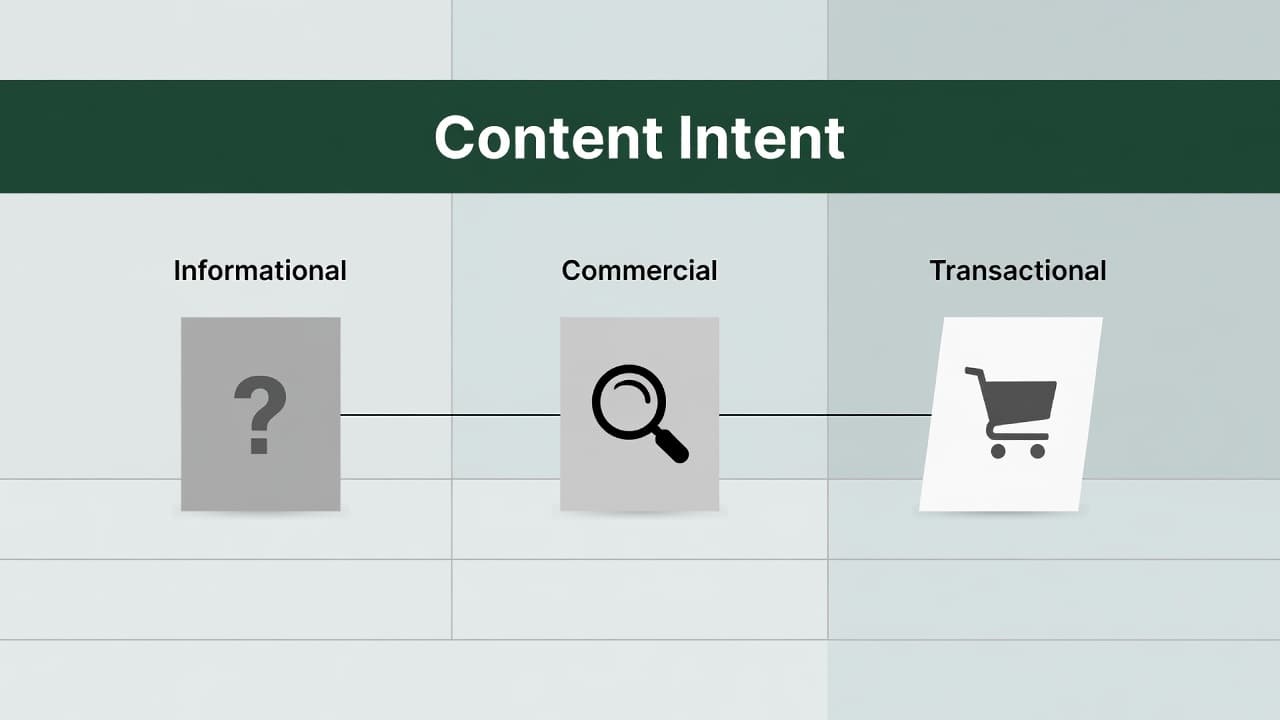
Search intent is the first filter. If the intent does not match, the structure comparison breaks down. An informational page should be compared with other informational pages. A commercial page should be compared with other commercial pages. A transactional page should only be tested against pages that push action.
Here is a simple way to sort pages before you audit them:
| Intent type | What the searcher wants | Pages to compare | Pages to skip |
|---|---|---|---|
| Informational | Learn, understand, solve a problem | Guides, explainers, how-to posts | Sales pages, product pages |
| Commercial | Compare options, weigh choices | Reviews, comparisons, best-of pages | Pure tutorials, checkout pages |
| Transactional | Take action now | Landing pages, pricing pages, demo pages | Top-of-funnel education posts |
Use the SERP and the page title to confirm the intent. Words like “how to”, “what is”, and “guide” often point to informational content. Phrases like “best”, “vs”, and “review” usually lean commercial. Terms such as “buy”, “pricing”, “quote”, or “demo” signal transactional intent.
A clean match gives you a fair comparison. For example, if you are auditing “best SEO audit tools”, compare list-style comparison pages, not a tool vendor’s homepage. If you are studying “how to do a content audit”, compare educational guides, not pricing pages. That small discipline keeps the findings useful.
If the intent changes, the page structure should change too.
For a broader audit method, Semrush’s content audit guide is useful for page-level review ideas, but intent matching should happen before you start scoring. It saves time and stops you from drawing the wrong lessons.
Use the SERP to find true competitors
Your real competitors are the pages that rank for the query you care about. Company size, brand fame, and industry reputation matter less than actual search visibility. A small site can outrank a household name if its page fits the query better.
Open the SERP in an incognito window, then look at the top results, People Also Ask boxes, and any featured snippets. Those pages are the ones search engines already trust for that query. They show you the structure that is winning right now, which is more useful than guessing based on a familiar brand.
This matters because big brands often publish content for many reasons, not just the query you are studying. Some pages exist for awareness. Some exist for PR. Others exist to support a product launch. The page ranking today is the one that reflects the current search need.
A smart competitor content audit focuses on pages that answer the same query in the same format. If the top results are all listicles, your sample should include listicles. If the results are all long-form guides, pull those instead. That keeps the audit tied to the real search result mix.
Look for these signs before you add a page to the sample:
- It ranks in the top results for your target query.
- It uses the same content type as your page.
- It targets a similar audience stage.
- It answers the same question with similar depth.
If a page misses two or more of those checks, leave it out. You want true competitors, not famous ones. The search results are the map, and the map matters more than the logo.
Limit your sample to a small, useful set
A tight sample is easier to score, easier to compare, and easier to act on. Three to five pages is usually enough. That range gives you a clear pattern without turning the audit into a spreadsheet swamp.
A small set also helps you stay honest. When you review too many pages, the best ideas blur together. When you review too few, you can mistake a one-off choice for a pattern. Three to five pages is the sweet spot for depth without clutter.
Use this quick scoring framework to keep the sample clean:
| Score area | 1 | 2 | 3 |
|---|---|---|---|
| Intent match | Poor fit | Partial fit | Strong fit |
| SERP relevance | Weak ranking match | Some overlap | Direct ranking competitor |
| Structural quality | Hard to scan | Mixed | Clear and usable |
| Depth balance | Thin or bloated | Uneven | Well matched |
| Reusability | Little to learn | A few ideas | Strong pattern value |
Score each page, then total the numbers. A higher score means the page is worth deeper study. Low scores usually mean the page is either off-intent or poorly built, which makes it a weak benchmark.
Use the sample to identify patterns, not to copy layout line by line. You are looking for structure that improves usefulness, such as better heading flow, stronger proof sections, or clearer calls to action. That is the point of the audit. The page with the best structure is often the one that makes the answer easiest to find, not the one that looks the busiest.
A good final sample might include:
- One page that ranks highest and matches the intent cleanly.
- One page that uses a different structure but still performs well.
- One page from a smaller site that handles the topic with sharp clarity.
- One page that earns links or visibility for a similar query, if it fits the intent.
- One page you think should rank, but does not, so you can spot the gap.
That mix gives you a useful spread without muddying the analysis. It also keeps your competitor content audit focused on structure, which is where the real lessons usually live.
A step-by-step way to audit competitor content structure
A strong competitor content audit starts with structure, because structure is what turns a page into something easy to read, trust, and act on. You are not tracing every sentence. You are mapping how the page opens, how it moves, and where it helps the reader decide what to do next.
That means looking at the page like a blueprint. Where does the promise appear? How quickly does the page answer the query? Which sections carry the most weight? For a broader view of competitor analysis, Coursera’s step-by-step competitor analysis guide gives a useful starting point, but this process stays focused on content structure and page flow.
### Start with the headline and opening promise
Begin with the title, because it tells you what the page claims to do. Ask whether the headline is clear, specific, and matched to the search intent. A strong title makes the topic obvious in seconds, while a weak one hides the value behind vague wording.
Then read the intro and note how fast it sets expectations. Does it explain the problem, name the outcome, and make the reader want to keep going? The best openings do three things well:
- They state the topic without fluff.
- They show why the page matters now.
- They create trust by sounding direct and useful.
If the intro rambles, repeats the title, or drifts into broad claims, that page may struggle even with good information later on. A sharp opening is like a front door with a clear sign above it.
Map the H2 and H3 hierarchy
Next, trace the heading tree. Write down every H2 and H3, then check the order. Strong hierarchy follows the way people think, starting broad, then narrowing into steps, examples, proof, or next actions.
Look for clean movement between sections. A good page does not jump around or bury key points under unrelated subtopics. Instead, each heading should answer one job and prepare the reader for the next one. That structure helps search engines read the page faster, and it helps people find answers without scrolling in circles.
A simple audit note can look like this:
| Heading level | What to check |
|---|---|
| H2 | Main topic blocks that match the search intent |
| H3 | Supporting points that break the topic into usable pieces |
| Flow | Whether the page moves in a logical order |
| Gaps | Whether a key question is missing |
If the hierarchy feels scattered, the page probably needs reordering before it needs more words. Strong structure works like a clean road map, not a pile of signposts.
Check topic coverage, depth, and missing angles
Once the outline is clear, compare what each section covers. Look for thin sections, repeated ideas, and angles the competitor skipped. You want structural gaps, not copied phrasing.
A useful competitor content audit asks three questions for each section:
- Does this section add a real idea, or just repeat earlier points?
- Is the depth enough for the search intent?
- What related question should have appeared here?
Pay close attention to sections that feel padded. Long paragraphs with little payoff often hide weak structure. On the other hand, a page can be too thin in places and still look long on the surface. The real test is whether each block earns its spot.
This is also where ethical analysis matters. You are not borrowing sentences or echoing the same examples. You are identifying what the page covers well, where it falls short, and where your own content can be more complete.
A missing subtopic often matters more than a missing keyword.
Review formatting, scannability, and UX signals
Now check how the page feels to scan. Short paragraphs, bullets, tables, bolded phrases, and visuals all shape how fast someone gets the point. On mobile, that matters even more, because dense blocks turn into walls of text.
Look for patterns that make the page easier to use:
- Short paragraphs that keep one idea in focus.
- Bullets and numbered lists that break up steps or comparisons.
- Tables that show side-by-side differences.
- Bold text that highlights key terms without overdoing it.
- Visuals that support the point instead of distracting from it.
A well-formatted page often reads faster than a longer one with poor spacing. That is important for zero-click results too, since scanners and AI summaries tend to pull from pages that are easy to parse. If the layout feels cramped on desktop, it will feel worse on a phone.
Inspect CTAs, internal links, and SERP support
Finish by checking the support elements. CTAs, internal links, FAQ blocks, and schema can guide the reader toward the next step. They also show whether the page is built to answer a question fully or just to hold attention for a moment.
Ask whether the CTA fits the page goal. A guide should usually move readers toward a related resource, a template, or the next step in the process. Internal links should point to helpful follow-up content, not random pages. FAQ sections matter when the query invites quick answers, and schema can help surface those answers in search results.
A simple scoring pass keeps this step practical:
- 1 point for weak or missing support.
- 2 points for partial support.
- 3 points for strong support that clearly matches the page goal.
Add those scores to your notes. When the structure, formatting, and support elements all line up, the page is easier to trust and easier to use. That is the kind of competitor page worth studying, because it shows how content structure does real work, not just decorative work.
Use a simple scoring framework to compare pages without bias
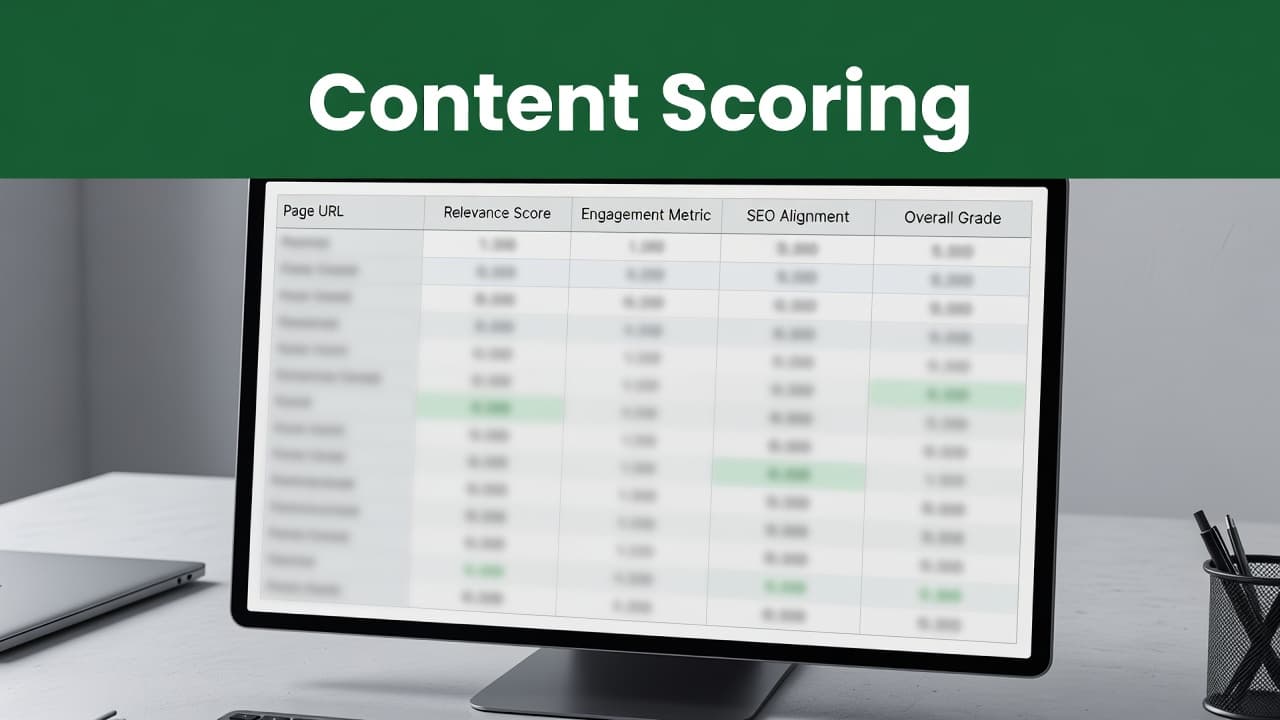
A competitor content audit gets messy fast when gut feel takes over. A simple scorecard keeps each page on the same playing field, so you judge structure, clarity, and usefulness instead of brand strength or design polish.
That matters even more if the audit also feeds AI-era visibility work, because clear pages are easier to scan, quote, and summarize. If you want a broader view of that shift, understanding generative engine optimization in 2025 gives useful context.
### Score the basics first, then the details
Start with the elements that shape the reader’s first impression. If the page fails there, advanced features won’t save it. Rate the headline clarity, intent match, heading flow, intro strength, and section balance before you move on to extras like FAQs, schema, visuals, or conversion blocks.
A simple 1 to 3 scale works well:
| Score | Meaning |
|---|---|
| 1 | Weak or missing |
| 2 | Present, but uneven |
| 3 | Clear and effective |
Use the same rubric on every page. That keeps the competitor content audit fair and makes the comparison easy to defend later. A page with strong formatting but weak intent match should not outrank a page that answers the query cleanly.
A practical order looks like this:
- Check whether the page matches the search intent.
- Score the headline and opening promise.
- Review the H2 and H3 flow.
- Judge readability and scanability.
- Add points for supporting features only after the core is scored.
That sequence stops shiny extras from pulling attention away from the basics. It also keeps weaker pages from looking better than they are.
Look for patterns across multiple competitors
Single-page notes can mislead you. Patterns across three to five competitors show what the SERP seems to reward. If most top pages use the same section order, similar support blocks, or the same type of proof, that is a strong clue about reader expectations.
Pay attention to recurring structure, not phrasing. For example, if several pages open with a short definition, then move into examples, then finish with action steps, that order probably fits the query well. If most winners use comparison tables or quick bullet summaries, those elements may be doing real work.
A few recurring signals are worth marking in every audit:
- Section order: Does the page lead with definition, steps, or comparison?
- Supporting elements: Do top pages use tables, bullets, FAQs, or visuals?
- Depth pattern: Do competitors keep sections brief, or do they expand with examples?
- Answer placement: Does the main answer appear early or late?
- Trust cues: Do strong pages add stats, quotes, screenshots, or original examples?
When the same pattern shows up again and again, treat it like a clue, not a rule.
That approach helps you separate real structure from decoration. A page can look different on the surface and still follow the same logic underneath.
Turn notes into a clean audit sheet
A clean template keeps the review usable after the first pass. Capture the facts in one place, then add short notes about what works, what feels thin, and where your page can do better. For a practical method, Contensis explains how content audit metrics should match your goals, and that idea fits this framework well.
Use a simple sheet with these fields:
| Field | What to record |
|---|---|
| Page URL | The exact competitor page |
| Search intent | Informational, commercial, or transactional |
| Main sections | H2s, plus any important H3s |
| Standout features | Tables, FAQs, visuals, proof, tools |
| Weak spots | Thin sections, clutter, missing answers |
| Opportunities | Gaps your page can fill better |
Keep the notes short and specific. “Good intro” is too vague. “Intro answers the query in 2 sentences” is useful. “Weak CTA” is also too broad. “CTA appears after too much filler” gives you something to fix.
A final score column helps too. It gives you a quick way to sort pages and spot the strongest patterns without rereading every note. Once the sheet is done, the next step is simple: turn the best structural ideas into your own outline, then write a page that answers the query faster and with less friction.
How to turn audit findings into a stronger content brief or outline
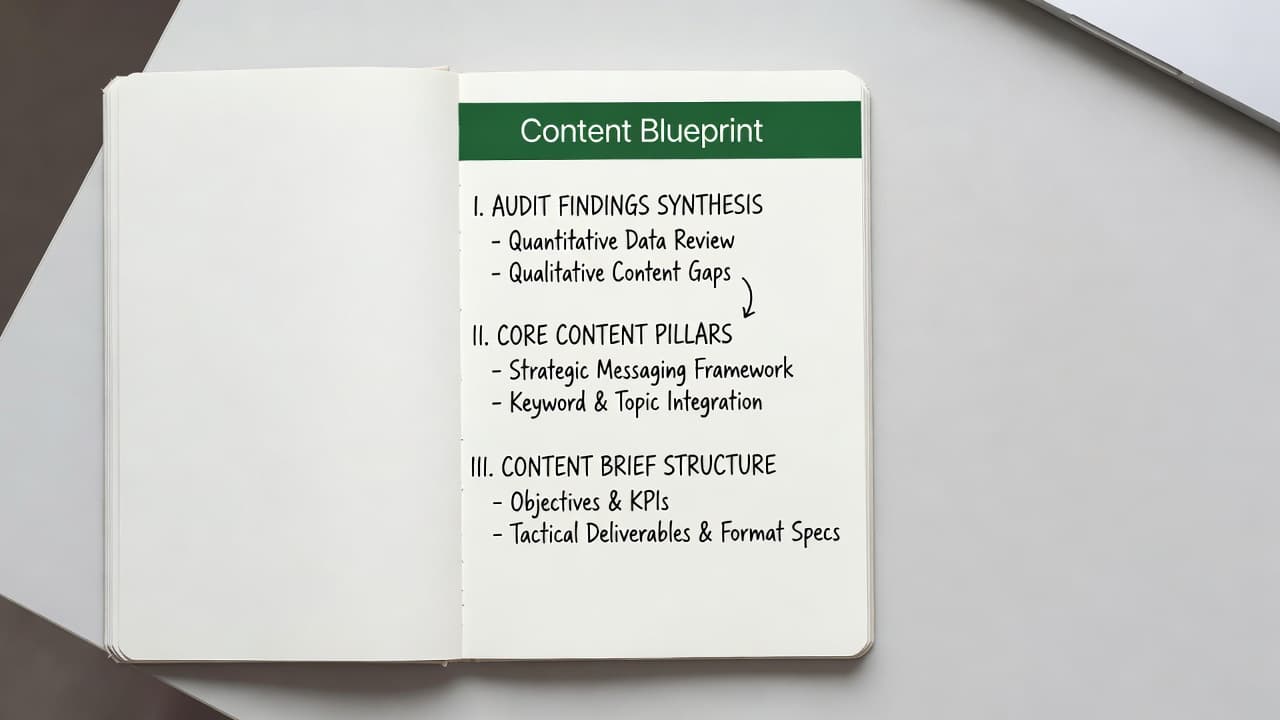
Audit findings only help when they change the next draft. The goal is to move from “this competitor does X” to “our page should do Y in this order, with this proof, for this reader.” That shift turns a competitor content audit into a working content plan instead of a pile of observations.
Use the findings to shape the structure first; then, add details, proof, and formatting. If the audit shows clear patterns, use those patterns to guide the brief. If you find gaps, use them to your advantage. This often means you should build a clearer path through the topic instead of writing a longer page.
If you are grouping related pages, building effective content clusters can help you decide where the new outline fits in the wider site structure.
Build a better section flow than the competition
Start by reordering the page around the reader’s fastest path to an answer. If competitors open with a broad context, but readers need a direct solution, move the answer up. If the SERP shows people comparing options, lead with the comparison instead of a long definition.
This is where structure beats imitation. You are not copying the page that ranks. You are using its shape to see where the topic feels easy or hard to follow. Then you build a cleaner route through the same information.
A good outline often does three things:
- Puts the main answer near the top.
- Groups related points into clear, short sections.
- Saves background details for later.
When the audit shows a missing step, add it. When a section feels crowded, split it. When two headings say almost the same thing, combine them. A brief should reflect the shortest path from question to clarity.
If the reader has to hunt for the core answer, the outline is doing too much work in the wrong order.
Add missing proof, examples, or next steps
Once the flow is right, fill the gaps competitors left behind. Strong pages rarely win on structure alone. They also give readers proof that the advice works, examples that make the point real, and a next step that keeps the journey moving.
For example, if rival pages explain a framework but never show it in action, add a short scenario. If someone talks about best practices without providing proof, you need to back it up. Add a statistic, a screenshot, a direct quote, or a concrete example from your own work to support the claim. After you explain a concept, help your reader put it into practice. You can provide a checklist, a template, or a specific task to make the information useful.
A useful audit-to-outline translation looks like this:
| Audit finding | Brief update |
|---|---|
| Competitor skips examples | Add one concrete example per major section |
| Competitor lacks proof | Include data, screenshots, or source-backed claims |
| Competitor ends abruptly | Add a next-step section or clear CTA |
| Competitor repeats itself | Tighten overlapping sections into one stronger block |
For support material, choose proof that matches the page goal. A how-to guide may need a checklist. A comparison page may need a table. A decision page may need a short conversion path. If you want a model for how to prioritize findings before writing, PathFactory’s content audit guide is a useful reference point for turning gaps into new content work.
Write a brief that is easy for writers to use
A strong brief should remove guesswork. It needs enough detail to guide the draft, but not so much that it feels like a script. The writer should know who the page is for, what problem it solves, what must be included, and how the page should be structured.
At minimum, the brief should include:
| Brief element | What to include |
|---|---|
| Audience | Who the page is for and what they already know |
| Search intent | What the reader wants to do or learn |
| Working headline | The page promise in plain language |
| Outline | The preferred H2 and H3 flow |
| Key points | Proof, examples, and gaps from the audit |
| Formatting notes | Tables, bullets, FAQs, or visuals needed |
| CTA | The next step the page should drive |
Keep the outline specific. “Add more detail” is too vague. “Explain how to rank findings, then show how to turn them into headings” gives the writer something real to build. If a competitor page used a weak structure, your brief should show a better one.
A simple reuse-friendly checklist helps too:
- The reader question is clear.
- The search intent matches the page type.
- The section order follows the reader’s logic.
- The missing proof or examples are listed.
- The format supports scanning.
- The CTA matches the goal of the page.
When the brief is this clear, the draft moves faster, and the final page is easier to trust. That is the real payoff of a competitor content audit: it does not just show what others publish, it shows how to build something more useful.
Common mistakes that make competitor audits less useful
A competitor content audit only helps when you read the page the right way. The biggest misses happen when marketers focus on what a page looks like on the surface, then miss the reasons it works, or doesn’t.
This often means copying existing layouts, chasing one successful page, or viewing desktop designs as if most users use large monitors. Many of the same problems show up in common SEO mistakes, and they can push an otherwise solid audit off course. The better move is to look for patterns, then ask whether those patterns fit the audience, the intent, and the search results as a whole.
### Copying the shape without understanding the reason
A page can look right and still fail. Maybe the competitor uses short paragraphs, a table, and a clear FAQ block, but the page works only because it matches a narrow search intent or a specific audience stage. If you copy the shape without asking why it works, you may build a cleaner page that still misses the mark.
This mistake shows up often in a competitor content audit. Marketers see a structure that ranks, then reproduce the same outline with different words. That can miss the point entirely if the winning page is built for beginners, while your audience wants a deeper comparison, a faster answer, or a stronger buying signal.
Before you borrow any structure, check three things:
- Audience fit: Does the page speak to the same reader?
- Intent fit: Does it answer the same job?
- Depth fit: Does it need the same amount of context?
When those pieces line up, the structure is useful. When they don’t, the layout is just decoration. For example, a long educational guide may need a slow build, while a high-intent page may need the answer up top and proof right after. Siege Media’s guide to common SEO mistakes covers how weak content choices can limit performance, and the same logic applies here. Structure should support the goal, not just mirror a competitor’s shape.
Ignoring readability and mobile behavior
A page can be rich in information and still perform poorly if it is hard to scan on a phone. Long blocks, cramped spacing, and weak heading breaks turn a useful page into a wall of text. On desktop, that might feel manageable. On mobile, it feels like work.
This is where many audits lose value. They review the page in a browser window, note that the content is thorough, and move on. Yet searchers rarely read every line. They skim for the answer, the proof, and the next step. If they can’t spot those pieces fast, the page loses momentum.
A useful mobile check is simple. Read the page on a phone, then ask whether these elements stand out:
- The main answer.
- The next heading.
- Any proof or example?
- The call to action.
If those details sit buried within thick blocks of text, you should rearrange your page layout. Shorter paragraphs help, but spacing matters too. So does heading rhythm. A page should feel like a path with signposts, not a single stretch of pavement with no landmarks.
If a page is hard to scan on mobile, its useful parts may never get seen.
You can quickly find issues with a simple test. Open your web page on a phone, scroll for 10 seconds, and stop. If you see only a gray blur of text, your audit should label the design as a weakness. Your content might be great, but the way you present it prevents people from reading it.
Treating one winner as the whole market
One high-ranking page can be misleading. A single winner tells you what that one page is doing well, but it doesn’t always reflect the broader SERP pattern. If you build your audit around one example, you may copy a rare outlier instead of a repeatable structure.
This mistake is common when a brand name sits at the top of the results. Big sites often win for reasons outside the page itself, such as links, authority, or history. That doesn’t mean the page structure is the best model. It just means the page is part of a bigger picture.
The safer move is to compare several pages and look for shared traits. If three or four results use similar heading flow, similar content depth, and similar support elements, you’re probably seeing a pattern the SERP rewards. If only one page looks different and still ranks, treat it as a clue, not a rule.
A simple audit checklist keeps this honest:
- Compare at least three ranking pages.
- Check whether they serve the same intent.
- Note shared structure patterns, not just similar topics.
- Look for outliers and ask what makes them different.
- Decide whether the pattern fits your audience.
That last step matters most. A pattern in the SERP is useful only if it supports your page’s purpose. A competitor content audit should help you build a better page, not a copied one. When you read the market as a group instead of a single winner, the findings become sharper and far more usable.
Conclusion
A strong competitor content audit comes down to one thing, seeing the pattern behind the page. When you map headings, depth, readability, and support elements, you stop copying surface style and start understanding what makes a page easy to use and easy to rank.
The clearest audits use a simple scorecard, then turn those notes into a sharper outline. That process gives you cleaner structure, tighter answers, and content that fits search intent without wasted words.
Before your next draft, audit three ranking pages, score their structure, and write down the one pattern they share. Build your page around that pattern, then improve the parts they handled poorly.