Traditional search used to feel like a hallway of doors. You asked a question, then chose which door to open. In 2026, many answers arrive before you touch the handle.
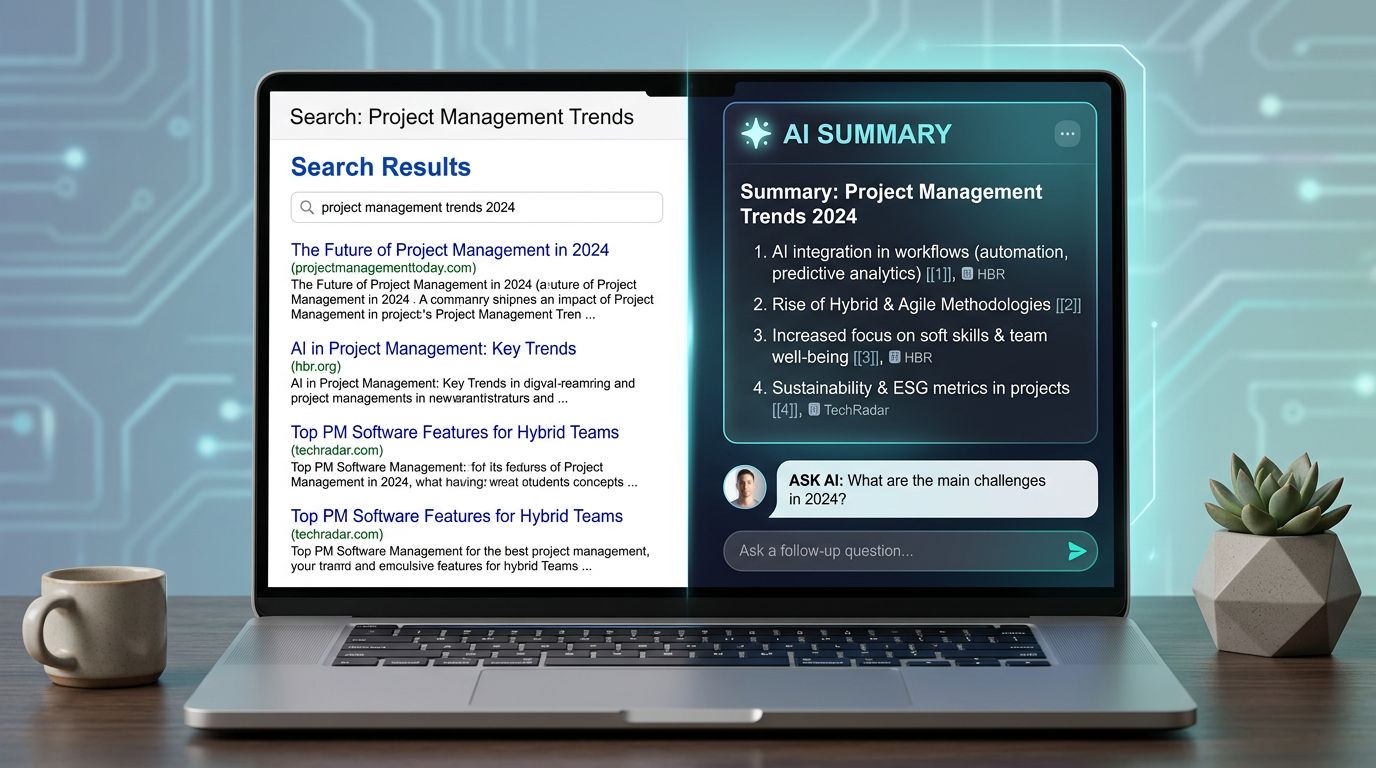
That shift is the real AI search impact, driven by the rise of generative AI. AI Overviews, answer panels, and chat-style modes can solve simple intent right on the results page. As a result, the work for SEOs, publishers, and brands is changing from “rank and win the click” to “earn trust, get cited, then win the right click.”
The good news is you can adapt without throwing out everything you know. You just need to optimize for a different moment in the journey.
How AI overviews change the search results page
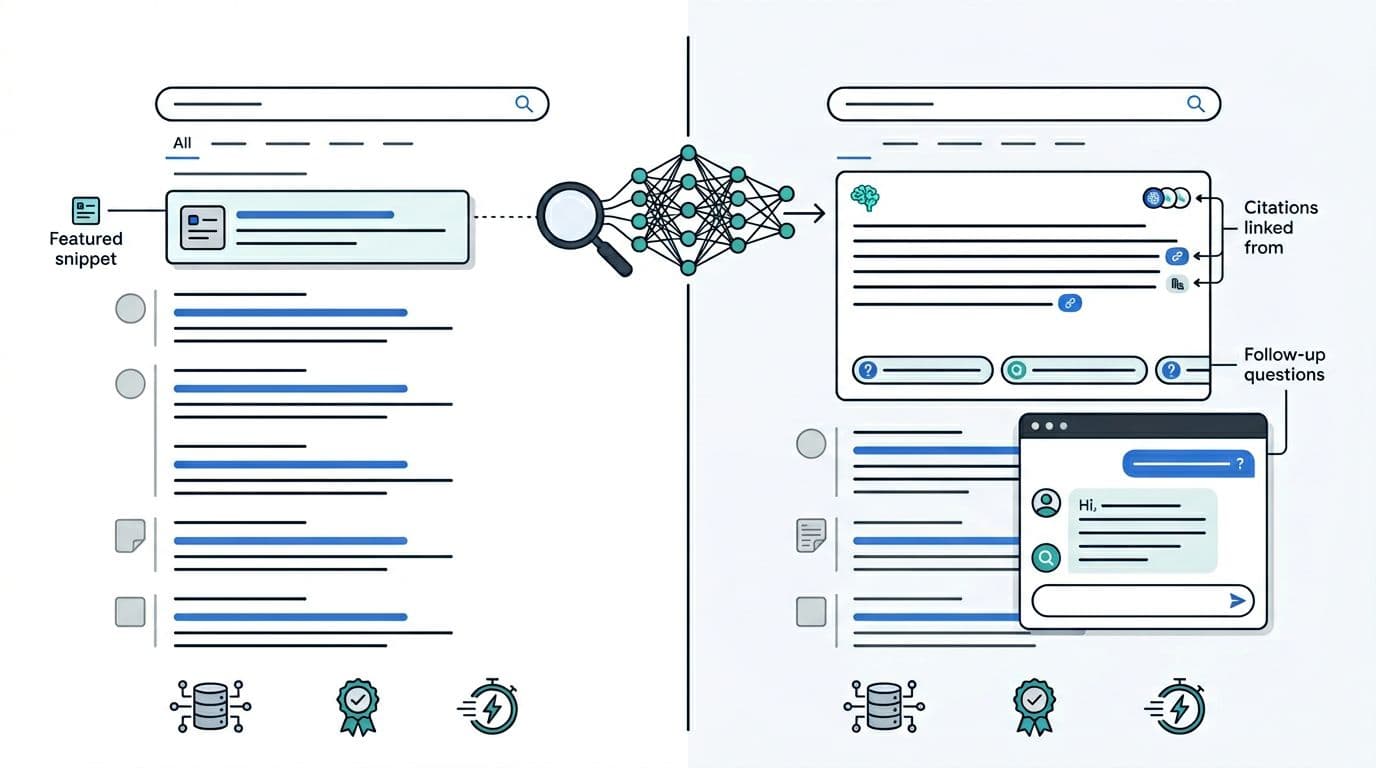
AI-driven results compress the journey for users engaged in information seeking. A user who once clicked three pages now gets a summary, sources, and follow-up questions in one view. That changes what “position one” even means, because the “best” answer may sit above the first organic link.
By March 2026, AI overviews powered by models like Gemini appear across many industries and query types, especially informational searches. Several market recaps show the footprint expanding, along with big swings in who gets visibility and who gets bypassed (see this breakdown of AI Overviews growth across industries).
Two mechanics matter most:
- The answer happens on-SERP, satisfying user intent without requiring a click for definitions, quick comparisons, or basic steps.
- Citations become a new kind of ranking. Getting linked as a source can drive brand trust, even if clicks dip.
That second point is easy to miss. In an AI Overview, the link is often a “proof point,” not a “next step.” So the winning page is the one that looks reliable in a machine’s eyes: clear structure, direct claims, solid sourcing, and content that matches the query without fluff.
If your page only restates what’s already common online, AI can summarize it without you.
What the traffic shift looks like in 2026 (and how to measure it)
The headline change is simple: more impressions, fewer clicks. AI answers soak up attention, so click-through rate drops even when rankings hold. Industry reporting through early 2026 shows a meaningful decline in organic traffic and a sharp rise in zero-click search behavior when AI answers appear (one practical summary is in Google AI Overview SEO impact in 2026).
That doesn’t mean SEO is “dead.” It means the marketing funnel got thinner at the top. Meanwhile, the visits you do earn can be more qualified, because users who still click often want depth, proof, pricing, tools, or a clear next step.
To understand the AI search impact on your own site, adjust how you track evolving search behaviors:
- In Google Search Console, segment by query intent. Watch informational terms separately from commercial terms.
- In analytics, create a view for LLM and assistant referrals (chat tools, AI browsers, and AI-mode surfaces). Treat it as its own channel.
- Track brand mentions inside AI answers where you can measure them, even if attribution is messy. “Share of voice” matters when clicks shrink.
Also, tighten your reporting language. “Traffic is down” is vague. “Clicks are down on overview-triggering queries, while assisted conversions are up” is a usable insight.
A helpful reality check: case studies vary by niche, but many publishers are seeing uneven losses, with some pages stable and others falling fast when AI summaries satisfy information seeking intent. For additional examples, this set of traffic data and case studies on AI Overviews is a solid reference point.
Traditional SEO vs AI-era SEO: what changes in practice
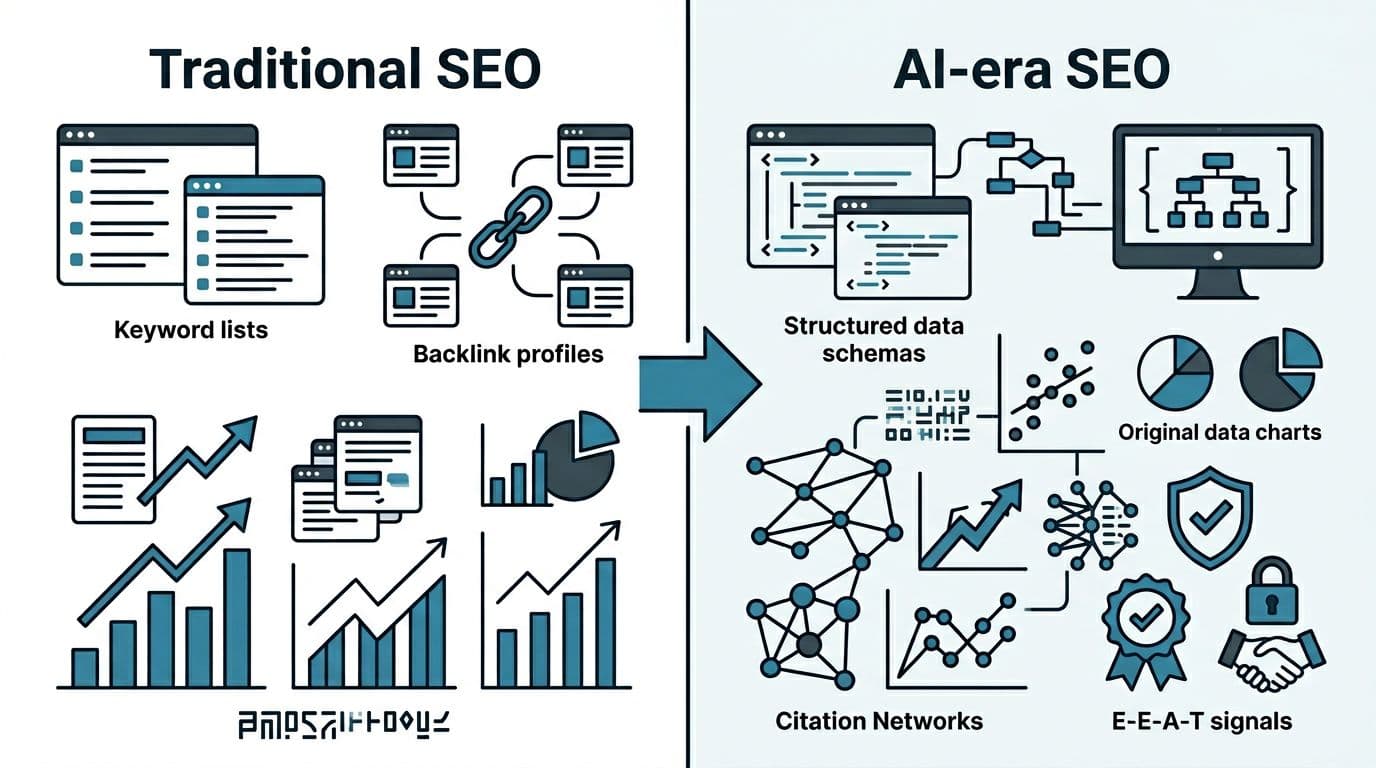
Traditional search isn’t obsolete. It’s just incomplete. You still need crawlability, speed, and relevant pages. However, AI-era search rewards pages that read like a dependable reference, not a keyword container.
Here’s a clear side-by-side comparison:
| Area | Traditional SEO | AI-era SEO (AEO/GEO, LLM optimization) |
|---|---|---|
| Primary win | Rank high, earn the click | Get cited, earn trust, win deeper clicks |
| Content style | Broad coverage, keyword mapping | Direct answers, strong structure, entity-based SEO, semantic search, verifiable claims |
| Authority signals | Backlinks, brand, topical clusters | Backlinks plus citations, author proof, source quality |
| SERP risk | Ranking drops | CTR drops even with stable ranks |
| Best pages | “Complete guides” for top queries | Pages with original data, examples, and clear takeaways |
| Measurement | Sessions and rankings | Mentions, citations, brand visibility, assisted conversions, qualified visits |
What stays the same? Technical health, strong internal linking, and helpful content. What changes is the definition of “helpful.” In 2026, helpful means a human trusts it and a model can extract it cleanly.
For a broader market view, this AI Search 2026 state of the market report frames how discovery is spreading across platforms like ChatGPT search and Perplexity, not just Google.
Content and technical moves that increase citations (with do and don’t)
AI answers still need sources. Your job is to make your page easy to trust and easy to quote.
Start with content upgrades that a model can’t fake:
- Add first-hand proof through multimodal content like original photos, test results, screenshots (kept clean), or short notes from real use.
- Put key claims near the top, then support them. Don’t bury the lead in scene-setting.
- Cite primary sources when you can, drawing human-centric insights from Quora and Reddit. If you reference stats, link out and name the study.
Then improve machine readability to better align with natural language processing models:
- Use descriptive headings that match real questions.
- Add short definitions, numbered steps, and simple tables where they fit.
- Implement structured data as a core part of your technical optimization. Common wins include Article, Organization, Product, LocalBusiness, FAQPage (when truly Q&A), and BreadcrumbList.
Now the simple rules to keep your search strategy focused while building team AI literacy:
- Do: write “what to do next” sections for commercial pages (pricing, constraints, alternatives).
- Do: keep authorship clear (bio, credentials, editorial policy).
- Don’t: spend time on keyword foraging for tiny variants.
- Don’t: rely on anonymous, unsourced claims, even if they “sound right.”
End-of-page checklist (copy and use)
- User intent check: Does the page solve one job, clearly?
- Evidence check: Did we add something only we could know or measure?
- Source check: Are claims supported with credible citations?
- Structure check: Could a reader skim headings and still get the answer?
- Schema check: Is structured data present and accurate for this page type?
- Tracking check: Are AI referrals, assisted conversions, and conversion rate visible in reports?
Conclusion: turning AI search impact into an advantage
AI is shrinking easy clicks, but it’s also spotlighting the sources it trusts. If you publish pages that serve the complexity of information seeking with proof, clean structure, and real expertise, you can earn citations and brand mentions for brand lift and higher-intent visits. Treat 2026 search like a conversation at a specific point in the customer journey where your site needs to be quoted, not just found. The teams that build trust into every page won’t just survive the shift, they’ll set the pace.