Majestic vs Ahrefs: 2026 Comparison Guide for Smarter SEO Decisions
Imagine you’re standing at a crossroads—one sign points to Majestic, the other to Ahrefs. As a website owner, marketer, or content creator, you know that smart tools make the difference between guessing and growing your rankings. The right SEO data isn’t just a number on a screen; it’s a map leading to more visitors and higher conversions.
Choosing between Majestic vs Ahrefs comes down to clarity, accuracy, and how quickly you can outpace the competition. Both promise deep insight, but your choice will shape your strategy. If you’ve ever wondered how better data drives real SEO wins, you’re in the right place.
Curious which toolkit matches your needs and goals? You’ll soon see what separates these industry leaders and how smart choices lead to measurable results. For more analysis, check out this Majestic vs Ahrefs comparison.
Majestic: The Specialist in Backlink Intelligence
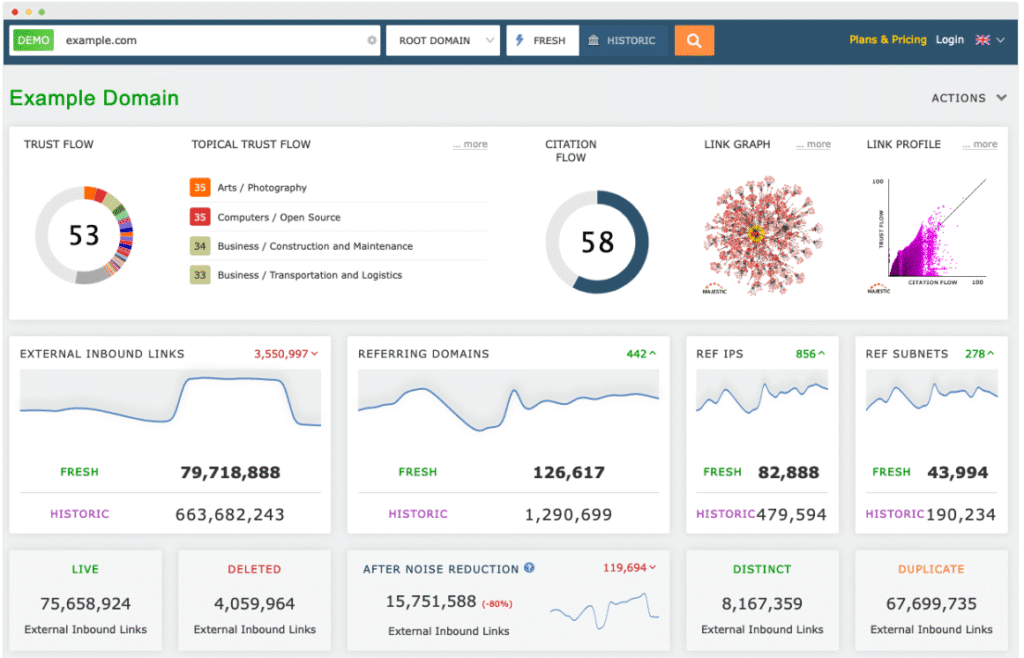
When you want to dig deep into backlink data, Majestic stands alone. This tool is built around the idea that not all links are equal, and it’s clear about what sets a quality backlink apart from a spammy one. If Majestic vs Ahrefs is your focus, understanding Majestic’s distinct approach to backlink intelligence is key.
Majestic’s strength is its sharp focus on backlinks, making it the tool of choice for link audit pros, SEOs who specialize in off-page analysis, and agencies hunting for clean link profiles. Unlike multi-purpose suites, Majestic sticks to its lane and does it well.
Unique Link Metrics and Their Benefits
Majestic shines because of three powerful link metrics:
- Trust Flow: Think of this as a reliable “neighborhood quality” score. Trust Flow measures how many backlinks lead from trusted, authoritative websites. Strong Trust Flow means your link partners are trustworthy, like living in a safe, respected part of town.
- Citation Flow: This one counts how many sites link to you, without worrying about their quality. It’s a popularity score, but having a high Citation Flow alone isn’t a win if those links are weak or spammy.
- Topical Trust Flow: Here’s where Majestic goes a step further. This metric tells you which subject areas your backlinks are coming from, matching your site’s links to topics like “Computers/Internet” or “Business/Marketing.” Topical Trust Flow uncovers if you’re part of the right conversation. If your tech blog has backlinks mostly from cooking sites, there’s a mismatch.
Why do these metrics matter?
- They help you judge link quality fast, not just link quantity.
- You can spot risks if a high Citation Flow isn’t matched with Trust Flow.
- Topical Trust Flow points out relevant communities, so you can build links where your audience actually hangs out.
- Niche website owners or those running link outreach campaigns can focus only on the connections that move them forward.
Majestic’s Fresh and Historic indexes support this work. The Fresh index shows what’s happening now, like a daily newspaper. The Historic index is like an old archive, helpful for tracking link growth or spotting spam spikes.
If you want practical ways to use these metrics in your business, you might enjoy these SEO tips for small businesses.
Pros and Cons of Majestic
Here’s a closer look at Majestic’s strengths and where it falls short.
Strengths:
- Depth of backlink data: Majestic’s index is massive, covering billions of links and offering historic records other tools can’t always match.
- Clear niche authority: By focusing only on backlinks, Majestic avoids bloat and goes deeper than most competitors.
- Great for budget-minded users: Its entry plans cost less than most full-suite SEO tools, making it accessible for freelancers or small agencies.
- Trust Flow and topical mapping: The data helps users quickly sort valuable neighborhoods from low-value spam.
Drawbacks:
- User experience can be clunky: The interface is utilitarian and doesn’t have the polish or simplicity of some rivals. Newcomers may stumble finding features or reading reports.
- Occasional inflated link counts: Sometimes Majestic’s crawler picks up links that aren’t truly active or valuable, which can lead to inflated numbers.
- Limited all-in-one SEO features: If you want extras like site audits, rank trackers, or content ideas all in one tool, Majestic isn’t a catch-all solution.
In the Majestic vs Ahrefs debate, Majestic is ideal for those who live and breathe backlinks, need granular topical data, and value historic records. If your work depends on sorting the good links from the mediocre, or you’re building a cleanup plan for toxic profiles, Majestic has the edge—but it asks you to learn its quirks.
Ahrefs: The All-in-One SEO Command Center
Step inside Ahrefs, and it feels like you’re handed a control panel for your every SEO move. While Majestic zeroes in on backlinks, Ahrefs widens its reach, pulling together nearly every data point an SEO pro could want. Here’s where “Majestic vs Ahrefs” becomes less about a simple feature match and more about a whole new way to approach growth and visibility.
Key Features and Workflow Advantages
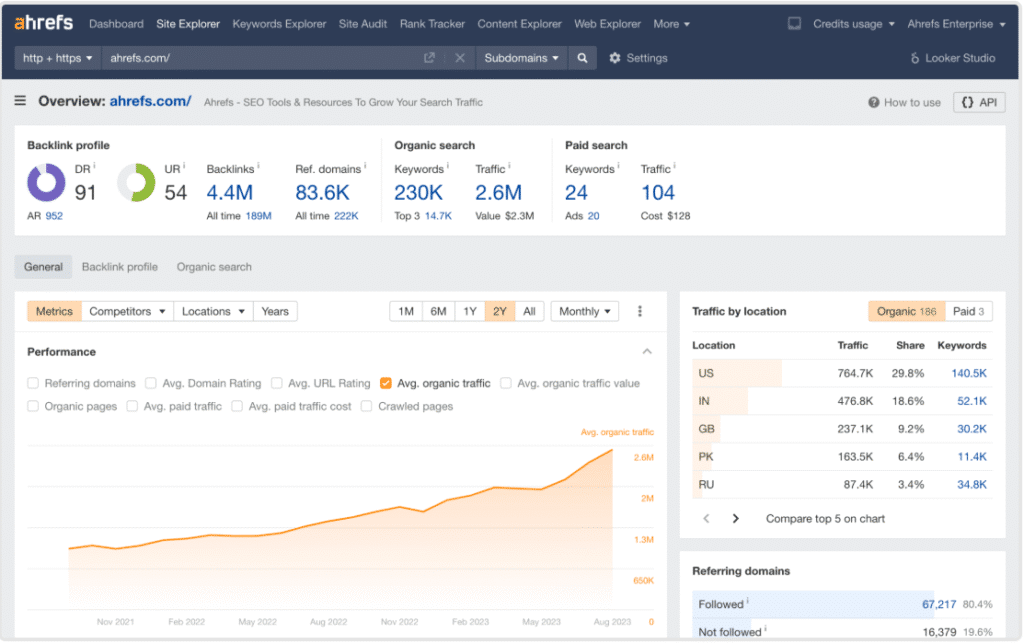
Ahrefs shines when you want a single dashboard for keywords, site health, backlinks, and content planning. Many users start their day in Ahrefs’ Site Explorer, surfacing what backlinks their site picked up overnight or what headlines are bringing competitors their biggest wins.
The platform gives you:
- A massive, constantly updated index: Ahrefs crawls billions of web pages, updating its link data almost in real time. This means you spot new backlinks, lost links, and changes before they ripple through your traffic.
- Site Audit tool: Run deep technical audits on your site. Spot crawling issues, slow-loading pages, redirect chains, or broken images—no extra software needed.
- Keyword Explorer: Find high-potential keywords based on traffic score, click potential, and difficulty. Get granular with search volume updates and “parent topic” suggestions that guide your whole content strategy.
- Content Gap analysis: Instantly see what your competitors rank for that you don’t. Plug in a few domains and Ahrefs surfaces the missed opportunities in minutes.
- Rank Tracker: Watch your positions climb or dip across search engines. The interface is uncluttered, and scheduled reports land right in your inbox.
- Alerts: Custom notifications about brand mentions, new backlinks, or keyword ranking changes—so you never miss pivotal shifts.
Picture a busy workflow: you audit your site health Monday morning, pull ten new keyword ideas before lunch, then chase down who linked to your best posts overnight. Ahrefs consolidates this rhythm, shaving hours off each week.
For site owners with big ambitions, Ahrefs’ data depth is a real advantage in the “Majestic vs Ahrefs” debate. Its index size means broader coverage for backlink discovery, content trends, and SERP shifts. No matter the niche or site size, the information stays fresh and actionable.
Strengths and Drawbacks of Ahrefs
Ahrefs builds trust with its clear design, structured reporting, and attention to what marketers need. The dashboard feels intuitive, whether you’re a solo blogger or handling dozens of clients. Navigation is quick: jump between keywords, content gaps, site health, and backlinks without losing your place.
Strengths:
- User-friendly experience: Even new users find their footing quickly. Navigation stays clear despite the platform’s power.
- Enormous, regularly updated data set: You get the pulse of the web, not a stale snapshot. Rapid refreshes surface the latest backlinks and keyword trends.
- Industry trust: Agencies, in-house teams, and consultants rely on Ahrefs daily because of its consistent accuracy and reliability.
- Comprehensive reporting: Keyword research, backlink checks, content audit, and site health—all in one interface.
Drawbacks:
- Higher pricing tiers: Ahrefs costs more than many tools. Entry plans cap reporting frequency and user seats.
- Reporting restrictions: The Lite and Standard plans limit how much you can query or export. Power users often need pricier plans to avoid bottlenecks.
- No native outreach tool: Unlike tools that let you pitch prospects within the dashboard, Ahrefs stops at research. You’ll pull data into other software for outreach or PR.
If you need to justify the expense, weigh the cost against several subscriptions you’d otherwise need. Ahrefs combines keyword research, rank tracking, backlink audits, and content analysis in one command center.
For anyone focused on site growth, the daily rituals—checking new links, fixing technical issues, or grasping market shifts—run faster and clearer in Ahrefs. If you want to get the most out of your backlinks, it’s useful to understand the importance of quality backlinks for SEO, building your foundation before even launching your outreach efforts.
In the “Majestic vs Ahrefs” match-up, Ahrefs wins for anyone who wants both breadth and depth—just know that this level of insight and usability comes at a premium.
Backlink Data Showdown: Accuracy, Coverage, and Relevancy
When comparing Majestic vs Ahrefs for backlink intelligence, the real differences show up in the details: the scope of their data, how quickly each platform updates, and how the tools handle large-scale exports and filters. The choice here doesn’t just impact reporting; it shapes the backbone of any SEO campaign. Let’s break down how both tools approach the fundamentals of backlink data.
Coverage and Data Freshness: Index Size and Update Speed
Majestic and Ahrefs both crawl the web with relentless dedication, but they do it their own way.
- Majestic splits its data into two main sets: the Fresh Index and the Historic Index. The Fresh Index updates daily, capturing links seen in the last 90 days. It’s quick, but not instant. If you want to see a snapshot of recent link growth, Fresh is your go-to. The Historic Index stretches deep—years and years of backlink records that let agencies track the rise and fall of any site’s popularity. Think of Fresh as your daily newsfeed, Historic as your archive.
- Ahrefs focuses on speed and volume, updating backlinks almost in real-time. Its index is constantly crawling and recrawling, often picking up new links within hours, sometimes even minutes. This near real-time data gives Ahrefs users a clear advantage for monitoring sudden changes, like catching a crucial new mention or finding out right away when a backlink is lost.
When you need broad coverage, both are impressive. Ahrefs usually holds the edge in the pure number of links indexed, particularly for active and changing parts of the web. Yet, Majestic’s historic graph lets you chart years of progress or penalty with a few clicks.
If detailed, time-stamped monitoring is central to your strategy, Ahrefs excels. If you love reviewing the history behind every link and need to audit old link-building efforts, Majestic gives you more depth to work with.
Trustworthiness and Exporting Data: Double Counting, Filtering, and Scale
Working with backlink data means trust, both in the numbers and in what those numbers represent.
- Majestic has faced criticism from some users who notice that its reported backlink totals sometimes include double-counting of links, like when both HTTP and HTTPS versions are picked up or when redirected URLs are counted as separate links. This can mean totals are inflated if you aren’t careful with filters. For a quick scan or top-level research, it’s not a dealbreaker, but for agency and enterprise clients, it can introduce noise into audits.
- Ahrefs puts a filter in place by default to help avoid these pitfalls, grouping duplicate URLs and being transparent about which links are live. But there’s a cap on how many rows you can export per report, especially on entry and mid-tier plans. Agencies managing big brands or multinational sites may hit these walls fast, and choosing a higher Ahrefs subscription is sometimes the only fix.
For agencies, detailed reporting is more than a luxury—it’s a non-negotiable. Majestic allows for large exports, but be prepared to do extra cleaning, especially on big portfolios. Ahrefs provides cleaner data, but plan your exports wisely and double-check what your plan includes.
Both tools hand you the magnifying glass and the map. Majestic’s raw, detailed exports give you maximum control, while Ahrefs’ curated data keeps things tidy and fast. In high-stakes campaigns, speed and confidence in your numbers make all the difference.
Agencies and enterprises often find themselves weighing headaches: Over-reporting in Majestic might mean extra hours of cleanup, while Ahrefs can limit discovery if row caps cut off the full picture. Striking a balance here is key for anyone comparing Majestic vs Ahrefs for day-to-day use.
Beyond Backlinks: Modern SEO Needs and Emerging Trends
The gap between “good enough” SEO and breakthrough results keeps widening every year. Search professionals expect more from their tools than just backlink totals or surface metrics. The push for integrated workflows and smarter features has raised the bar for what Majestic and Ahrefs must deliver in the Majestic vs Ahrefs conversation.
Integrated SEO Workflows: Ahrefs Broadens the Horizon
Modern SEO work isn’t a straight path—it’s more like a relay race, where research, execution, and analysis pass the baton seamlessly. Ahrefs stands out by turning this relay into a single, smooth run. It enables users to:
- Discover opportunities with robust keyword and competitive research
- Audit technical site issues and recommend fixes
- Track rankings for target keywords
- Monitor backlinks and anchor text trends
- Visualize progress and report to stakeholders—all in one dashboard
This all-in-one approach fits agencies, in-house teams, and business owners who wear many hats. It saves time and keeps strategy and action under one roof. Content ideation, rank tracking, site health, and backlink discovery work together, letting teams follow data from start to finish and measure the results without ever exporting a file.
Majestic, by contrast, is a specialist’s tool. Its workflow is perfect for backlink pros, domain investors, and SEOs whose main focus is on off-page signals. You get granular link charts, deep historical data, and advanced filtering for forensic audits. While this can be gold for those working on link audits or evaluating domains to buy or sell, Majestic doesn’t branch out. You’ll need extra tools to audit technical SEO, research keywords, or track your rankings.
For businesses aiming to improve every part of their search efforts—from brainstorming content to making technical fixes—Ahrefs takes the lead. But for those focused on link quality, link buying, or portfolio research, Majestic’s data holds a unique edge.
For those looking to pair a modern workflow approach with sharper technical skills, check out page speed and SEO best practices in this guide: SEO page optimization for speed.
Adaptability and Ongoing Innovation
The world of SEO tools isn’t slowing down. Ongoing updates and AI-driven features are changing the way professionals approach algorithms, trends, and reporting.
Ahrefs pushes regular innovation front and center. The platform has rolled out:
- Automated content and site analysis powered by machine learning
- Smarter keyword difficulty estimates using live SERP data
- Visual site audit reports that flag issues and guide improvements
- An expanding library of integrations, API options, and alert systems
Updates roll out several times a year, often based on user feedback. These include cleaner reporting visuals, more granular filters, and instant data checks. Interfaces adapt rapidly to new search patterns, Google algorithm shifts, and technical site demands. Ahrefs users can switch between tools or get AI-backed suggestions to fix problems or uncover new content angles, moving beyond pure data crunching to intelligent prioritization.
Majestic continues improving its core: backlink tracking and topical relevance detection. New features focus on capturing the link pulse of the web and presenting advanced context, like topical flows, over time. While some users wish for broader features, link builders and domainers rely on Majestic’s consistency and stability. The user interface and data exports get incremental upgrades, but the focus is always on backlinks.
When comparing Majestic vs Ahrefs on tech innovation, Ahrefs comes out ahead. It caters to users expecting constant updates, broader integrations, and the latest in AI-powered insights that help paint the real picture of site health and opportunity. Majestic offers reliability and expert-level clarity in the world of links.
For readers interested in the evolving role of keyword tools and search intelligence, check out keyword research strategies for on-page SEO. Combining smart keywords, fast fixes, and powerful backlinks is quickly becoming the new SEO standard—and your choice of toolsets will decide how much ground you cover.
Pricing, Plans, and Value for Money
Choosing between Majestic and Ahrefs often comes down to budget, the scope of your SEO needs, and how much value you pull from each dollar spent. Both tools attract users with a range of pricing options, but their plan structures and features cater to different audiences. Before reaching for your wallet, it helps to see exactly what you get at each tier and who benefits most from each approach.
Majestic Pricing: Affordable Entry to Backlink Intelligence
Majestic keeps its pricing simple and focused. If you want deep backlink data without all the SEO extras, Majestic hands you exactly that—without heavy overhead.
- Lite Plan ($49.99/month billed monthly)
Best for freelancers, small agencies, or new site owners on a budget. Includes access to the Fresh Index, basic Trust Flow and Citation Flow metrics, and enough daily analysis capacity for most light to moderate users. - Pro Plan ($99.99/month)
Designed for growing agencies or those needing advanced reporting. Pro unlocks the Historic Index, enables deeper competitor analysis, detailed custom reports, and Backlink History tools. - API Plan ($399.99/month)
Meant for enterprises or those who automate reports and manage dozens or hundreds of client sites. API provides robust data pulls and integrations for heavy users.
Majestic’s model rewards users who know what they want—powerful backlink discovery, monitoring, and export capabilities. You don’t pay extra for on-site SEO tools, rank tracking, or keyword research.
Who benefits most?
- Link-building specialists, SEOs who audit sites at scale, and users who prefer a one-tool backlink solution with budget control.
- Agencies managing multiple lower-budget clients, as even the Pro plan remains affordable when spread across projects.
For small business marketers or beginners looking for even more actionable steps, check out SEO best practices for small businesses for practical insights alongside your Majestic plan.
Ahrefs Pricing: Pay More, Get More Power
Ahrefs aims to be the Swiss Army knife of SEO tools, and its price reflects the breadth delivered. Every plan provides access to a unified platform combining backlinks, keywords, technical SEO, and competitive analysis.
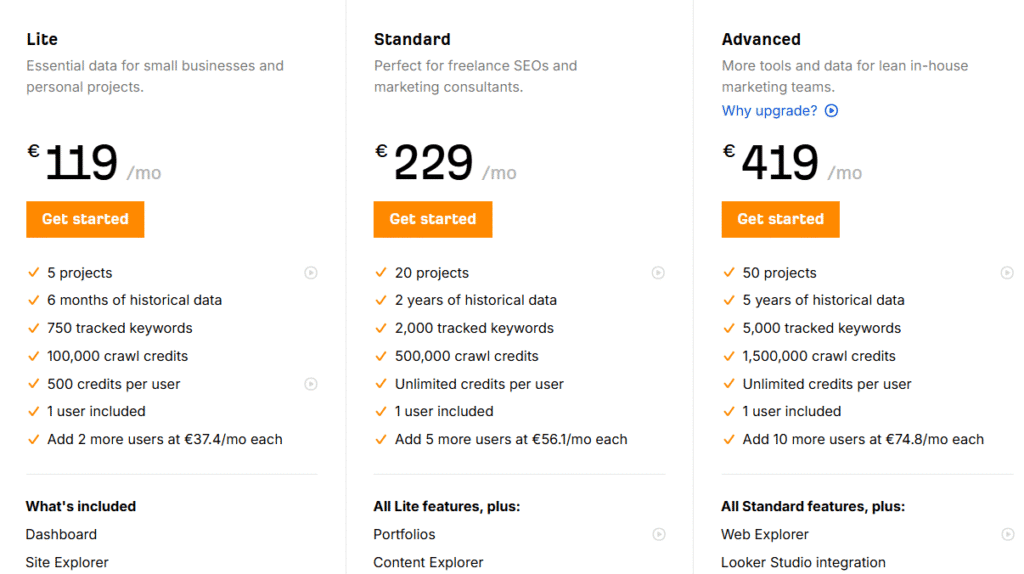
- Lite Plan ($129/month)
Ideal for solo marketers, bloggers, or startups needing basic keyword, site, and content tools. Covers up to 5 projects, 6 months of historical data, and 750 tracked keywords. - Standard Plan ($249/month)
Unlocks more data: 20 projects, extended historical records, and increased reporting limits—suited for small agencies or in-house teams managing several brands. - Advanced Plan ($499/month)
Jump to 50 projects, exhaustive historical data, improved content reports, and priority support. Made for growing agencies, consultants, or digital publishers with bigger demands. - Enterprise/Agency Plan ($999-$1,499/month)
High-volume, multi-user access for agencies working with enterprise stacks, running global campaigns, or requiring API integration and white-label reporting.
What’s behind the higher price?
- Unlimited access to keyword research, site auditing, rank tracking, and competitor analysis.
- Industry-leading backlink discovery with one of the largest and most frequently updated indexes.
- Continuous innovation, more integrations, and regular feature updates based on user requests.
Ahrefs can often replace several subscriptions, making it a powerhouse for teams that want to run every aspect of SEO from a single interface.
Who gets the most value?
- Growing agencies, in-house marketing teams, or content operations balancing content, technical SEO, and link-building.
- Users who need both high-level overviews and granular details without bouncing between platforms.
For even more perspective on what advanced SEO features can do, learn how AI tools are changing keyword research and on-page SEO.
Value for Money: ROI Over Time
The long-term return on investment for Majestic vs Ahrefs ties back to two things: what you actually need, and what you can use.
- Majestic’s plans stretch dollars if your work is single-mindedly focused on backlink intelligence, historical analytics, or large export needs at a lower cost. Over months or years, Majestic costs less for users who don’t need keyword or technical tools.
- Ahrefs, though pricier, often proves its worth if you’re aiming to cover all bases—content, technical SEO, link audits, and keywords—in one place. For agencies juggling multiple disciplines or larger brands justifying the expense with productivity, Ahrefs delivers freedom and scale.
Pricing should never be the only factor, but savvy buyers know how to line up features with business goals. A clear plan now saves headaches and costs later as your needs grow.
Seeing your costs in context is half the battle. Majestic wins for narrow, deep needs at lower prices. Ahrefs commands a premium but offers an SEO toolkit you rarely outgrow. Knowing how each aligns with your mission makes spending smarter—not just bigger.
For a recap on the strengths and best uses of each, see the full Majestic vs Ahrefs comparison breakdown.
Conclusion
Majestic shines for backlink specialists, domain investors, and those who put link analysis at the heart of their efforts. Its historic data and topical trust metrics hand you the details for deep backlink audits or investigating domain authority shifts over the years. If backlinks drive your strategy and cost matters, Majestic fits with precision.
Ahrefs rewards users who want an all-in-one dashboard. Content creators, agencies, and marketing teams thrive with keyword research, site audits, rank tracking, and backlink discovery tied together. Its near-real-time updates and easy navigation let you react quickly and plan broad campaigns with confidence.
For audits, link cleanups, or domain research, Majestic delivers focus and history. For ongoing growth, tracking keyword opportunities, or managing multiple sites, Ahrefs fuels bigger results.
Ready to pick your toolkit? Track your wins, review your progress, and let better data shape your next steps. When you match your needs with the right tool, growth follows. Curious how pros use these tools for earning strong backlinks? Check out these trusted outreach tips for building backlinks.
Thank you for reading—share your experience or favorite insights below, and make your next SEO decision count.